Blog
November 12, 2025
Onboarding Your AI: how to roll out learning software like Solid in the real world

Tali Hirsh
VP Product & Strategy

With many years of product leadership under her belt, Tali took on the product discovery in full force when she joined in August 2024. Today, she shares valuable lessons on how to do this well.
When you’re building a product in a small startup, “doing discovery” sounds easy in theory - talk to users, test ideas, learn, iterate.
But how can we leverage even the initial first batch of early customers? Welcome to early-stage product discovery.
This is how we did it at Solid.
Listen to Sales Calls
Your sales calls are gold mines. Every conversation reveals what excites people, what confuses them, and what makes them hesitate.
When you listen, focus on:
- Who’s showing interest (which persona)? - e.g., VP of Data, Director of Data, CDO, etc.
- Why do they care? Why now? - for example, at Solid, we identified an emerging need among data teams to leverage AI quickly and make their data stack AI-ready. We then adjusted our existing capabilities to address this specific need.
- What’s stopping them from buying? At Solid, we mapped the main blockers that surfaced in sales calls and worked to remove them gradually.
- Which features light them up?
👉 Don’t rely on AI summaries alone! They miss nuance.
Listen to the leads’ tone and emotion, replay important snippets, and note the exact words they use. Those words will later shape your positioning and messaging.
Join Sales Calls and Customer Chats
Sit in on every conversation you can. At Solid, I asked Yoni, our CEO, to join sales calls and dedicate 10 minutes at the end of each one specifically for product discovery. Customers often open up more after the formal pitch is done, and the insights you’ll get from these unscripted moments are pure discovery magic.
Run Your Own Interviews
Don’t wait for a UX team or user researchers - be your own researcher.
Talk to:
- Friends and family (yes, really) - ask them to connect you with relevant people in their network.
- Ex-colleagues who fit your persona - I specifically met with former colleagues at Gong who helped me understand the overall direction and surface their main pains. They also gave me honest feedback - which is gold.
- People you find on LinkedIn. There are many tools that can help you track and reach out to them easily. I used Dripify for a large-scale LinkedIn outreach
- Consultants who represent your target users. We identified influential and experienced people in the data space and brought them on as formal consultants, whom I meet with weekly.
- Your active investors - for us, that’s Team8. They often see many startups and can share patterns, lessons, and feedback from similar markets.
👉 End every call with, “Who else should I talk to?” - it keeps the momentum going.
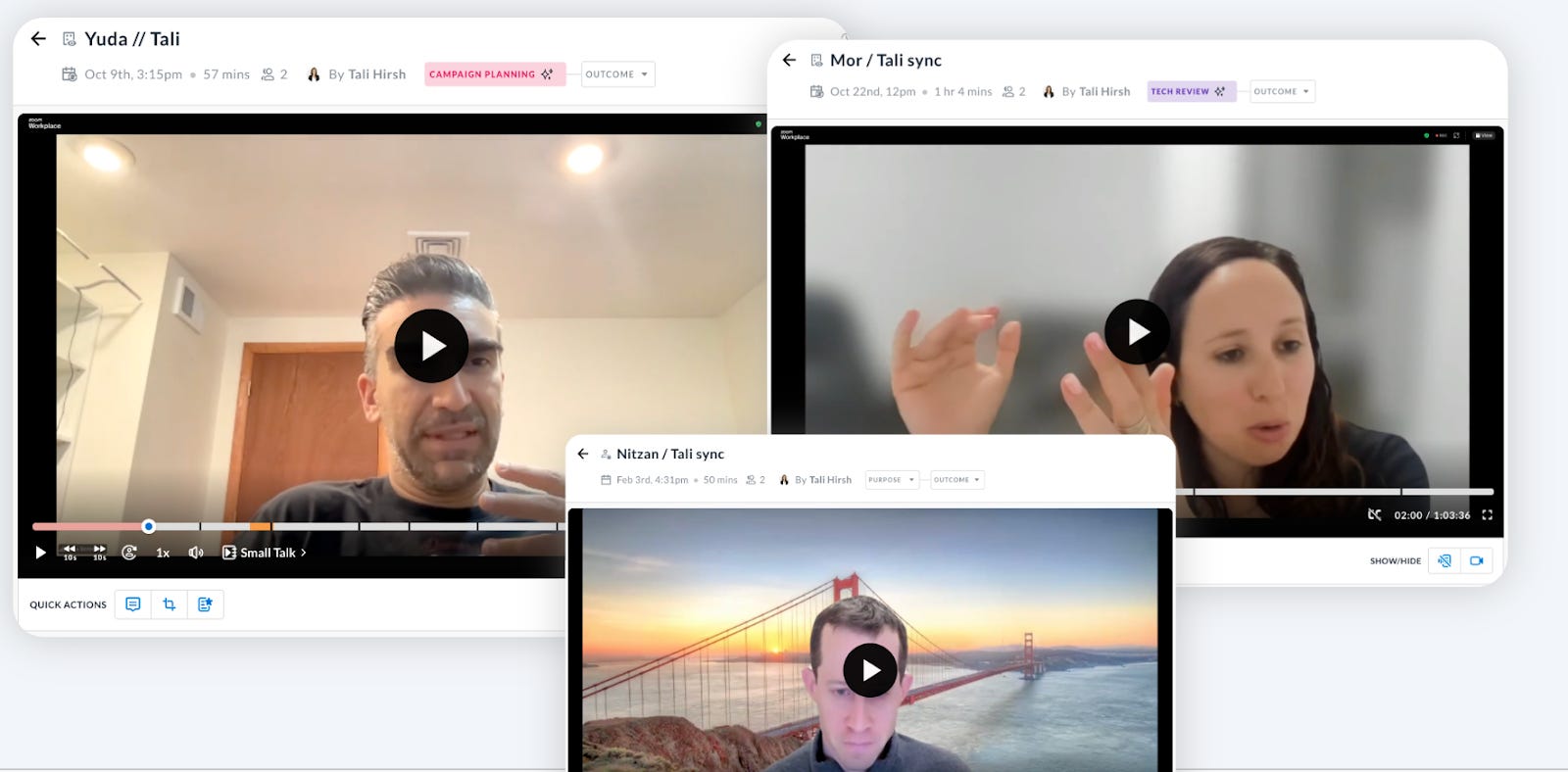
Talk to Your Users Every Week, Even If You Only Have a Few
Even if you have just a few customers - make it a weekly habit to talk to them.
You don’t need a big user base to learn. Each conversation helps you see your product through fresh eyes. Rotate who you speak with so every week you meet someone new, and focus on understanding how they actually use the system, what’s working for them, and what’s missing.
These short (30 min Zoom call), honest conversations often reveal things no dashboard ever will:
- Where your users find real value
- What feels confusing or clunky
- What they’ve hacked together as workarounds (always gold!)
Summarize your findings on a monthly basis and share them with your customers. Data leaders appreciated learning how their teams are using the product, what challenges they face, and what they are currently focusing on - it gives them valuable visibility into their own organization.
Analyze Real User Behavior Using Product Analytics Tools
Talk is great, but nothing beats watching how people actually use your product.
Record sessions using tools like Amplitude, Mixpanel, Heap, etc. Observe workflows. See where users hesitate or take unexpected paths.
Summarize the most interesting sessions and share them with your colleagues. At Solid, this has been a powerful way to identify issues that often turn into Jira tickets. It’s also been one of the biggest drivers behind continuously improving our chat capabilities.
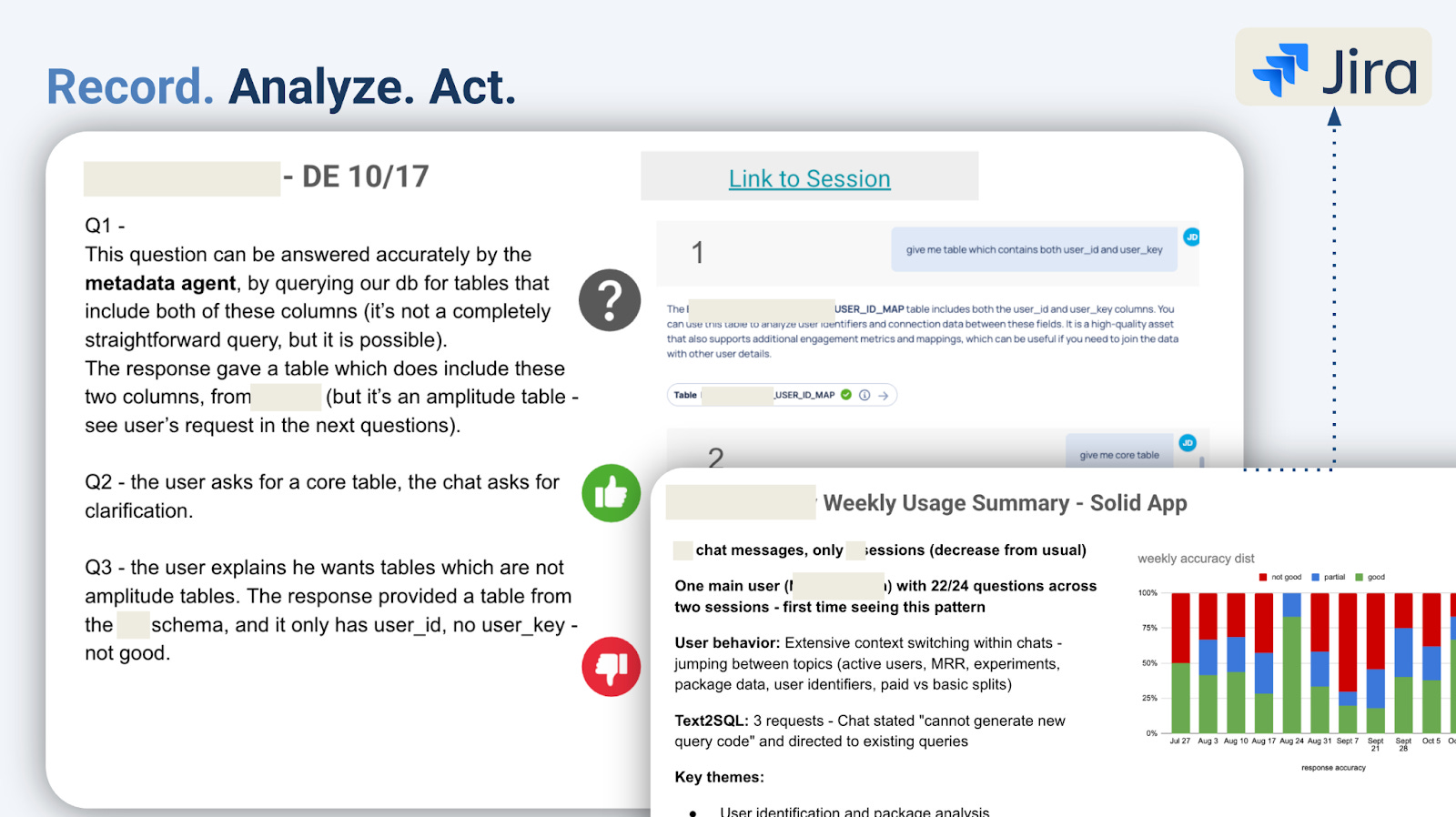
Those small moments reveal what no interview ever will.
Ask for Feedback in Context
The best time to ask for feedback is right when users need help or are trying something new.
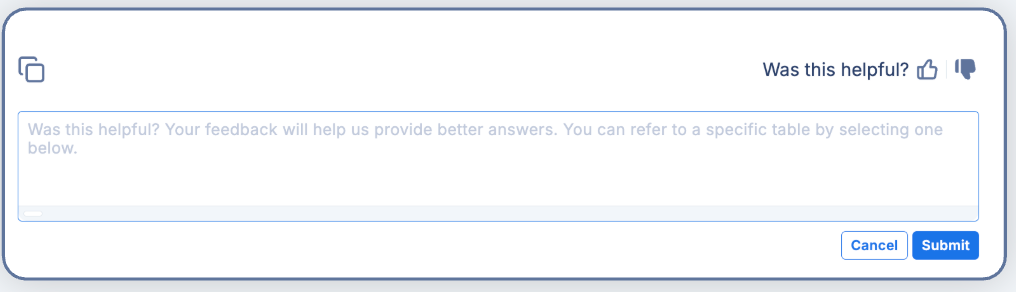
Add micro-feedback prompts inside the product - short, contextual, and easy to answer.
Example: “Was this result helpful?” or “Did you find what you were looking for?”
At Solid, we added a simple thumbs-up/thumbs-down option to collect feedback on every chat response, along with an optional field for users to explain why a response was good or bad. This feedback often results in Jira tickets, helping us continuously improve the product.
However, we realized that the vast majority of users do not click on these thumbs. To address this, we worked closely with our customer’s champions, explained how critical this feedback loop is to the success of the deployment - and they helped drive adoption by promoting it internally.
How to Run Great Discovery Calls
Well, there are tons of blog posts, articles, podcasts, and meetups that cover this topic, but here are the principles I cherish most:
- Your goal is to learn, not to confirm what you want to hear.
- Listen! Listen! Listen! Talk 20% of the time, listen 80%.
- Don’t rush to fill awkward silences - they often lead to deeper insights.
- Look for proof of pain:
- “When was the last time this happened?”
- “Have you tried solving it before?”
- Never start by showing your solution.
Share Your Insights With Everyone - After Every Meeting
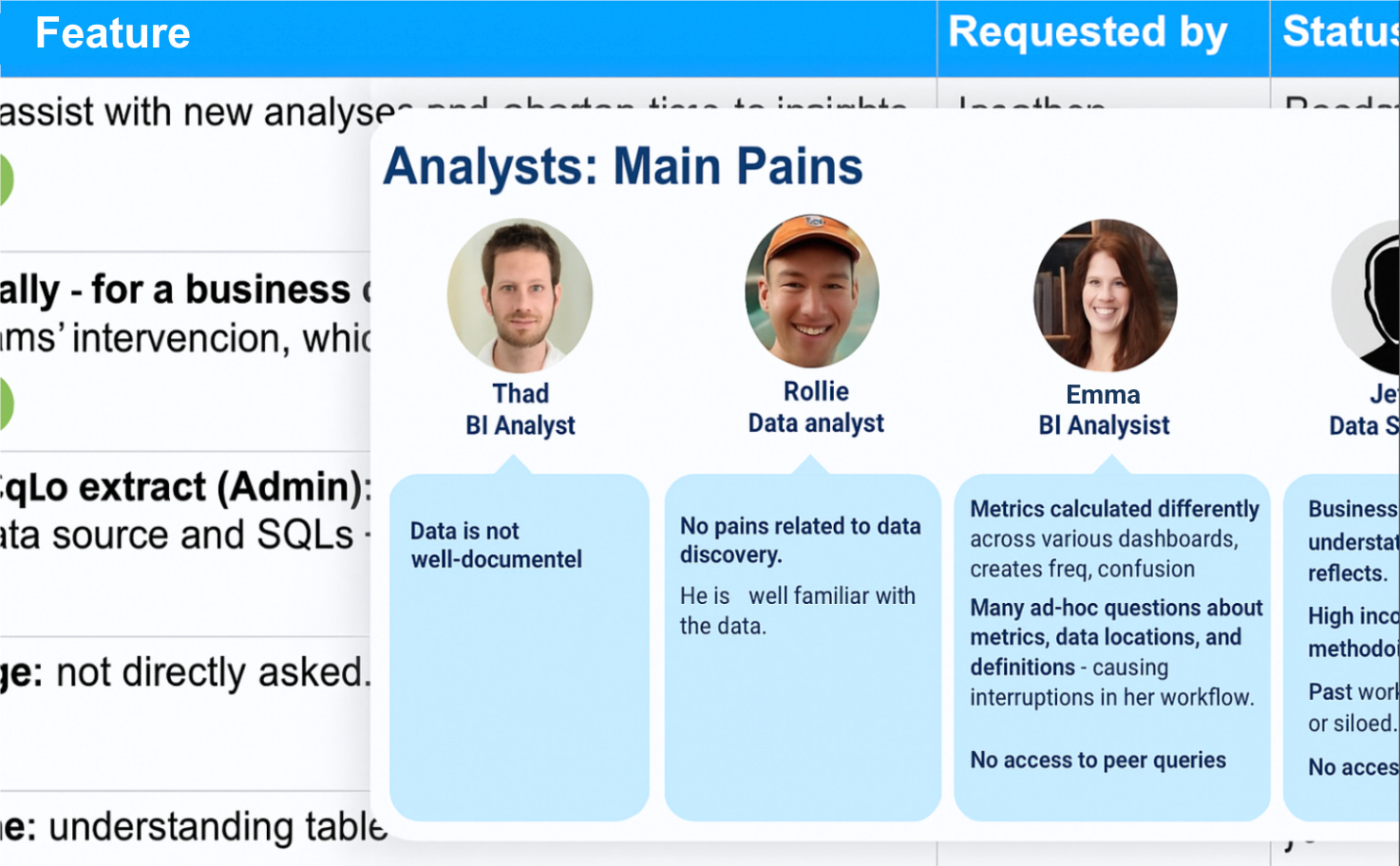
- Extract and summarize insights: pains, use cases, feature ideas.
- Turn them into action items.
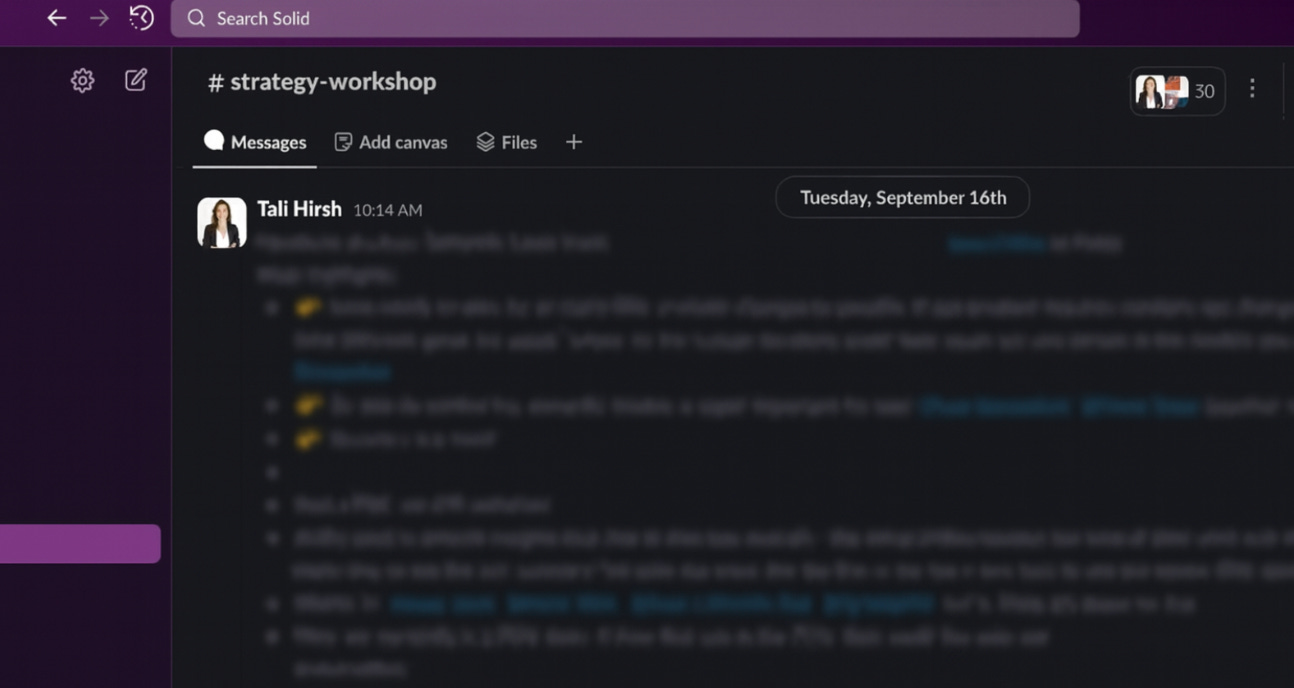
- Share the call recording and your notes on slack with your team (product managers, developers, leaders). Tag relevant colleagues. Discovery should never live in one person’s head.
Key Takeaways
- Listen to sales calls - understand pains, and extract insights.
- Run your own sessions - talk to friends, ex-colleagues, customers, consultants.
- Join calls - ask for 10-minute interviews to dig deeper.
- Observe user sessions - real behavior reveals insights beyond opinions.
- Collect feedback in-app - at the moment it matters.
- Share insights internally - discovery is a team sport.
Building great products in early-stage startups isn’t about having a big research team - it’s about curiosity, empathy, and making the most of every conversation.
When you learn fast from a few users, you’ll be amazed how far that small sample can take you.
Other posts