Blog
July 9, 2026
AI Can't Wait for Your Data Migration

Blair King Bader
Marketing Manager
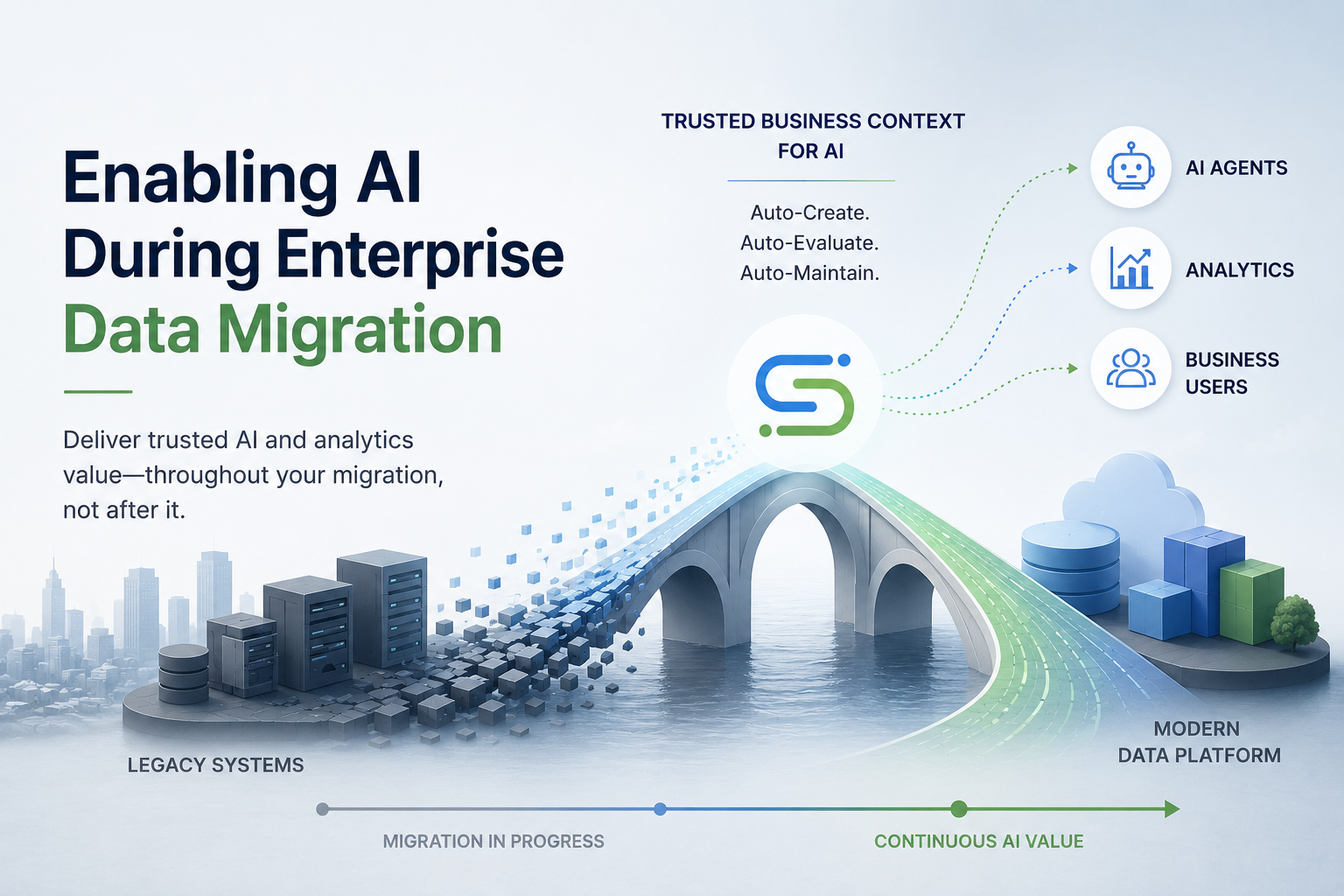
Enterprise data migrations often take years, but business demand for AI can't wait. Learn why leading organizations are enabling AI during migration - not after it - and how building a trusted semantic foundation allows them to deliver value across both legacy and modern data environments.
Every enterprise is migrating.
Some are moving from Oracle to Snowflake. Others are modernizing Hadoop environments into Databricks. Many are adopting Microsoft Fabric while maintaining decades of legacy infrastructure. Whatever the destination, one thing is consistent: migrations take far longer than anyone expects.
Unfortunately, business expectations don't pause while data teams modernize their stack.
Executives are no longer asking when the migration will finish. They're asking when they can start using AI.
This creates a challenge for data leaders. They know modern platforms are essential for the future, but they also know migration projects often span years. Waiting until every workload has been moved before delivering AI simply isn't an option.
The organizations succeeding with AI are approaching the problem differently.
Migration Is Continuous, Not Temporary
Many organizations still think about migration as a project with a clear finish line.
In reality, enterprise data environments are in a constant state of evolution.
A company that migrated from mainframes to relational databases eventually adopted Hadoop. Hadoop gave way to cloud data warehouses. Today, organizations are investing heavily in Snowflake, Databricks, Microsoft Fabric, and other modern platforms. Tomorrow, another generation of technology will emerge.
The destination changes, but the migration never truly ends.
That means treating migration as something that must finish before innovation begins creates an impossible timeline.
The Business Doesn't Care Where Data Lives
One of the biggest mistakes data teams make is assuming the business values infrastructure modernization.
It doesn't.
Business leaders don't celebrate moving data from Oracle to Snowflake. They care about whether they can answer questions faster, automate manual work, and make better decisions.
Modernizing infrastructure is important, but only because it enables new capabilities.
The most successful data leaders understand this distinction. Rather than presenting migration as the goal, they position it as the foundation for delivering measurable business outcomes through AI, analytics, and self-service access to trusted data.
AI Should Begin Before Migration Ends
This is where many AI initiatives stall.
A significant portion of enterprise data often remains in legacy systems while another portion has already been migrated to modern cloud platforms. Teams assume AI must wait until everything resides in one location.
That assumption is becoming increasingly expensive.
Organizations should instead focus on making trusted business data AI-ready regardless of where it currently lives.
As new data is migrated, it should immediately become available to AI applications. At the same time, valuable business data that still resides in legacy environments shouldn't be excluded simply because it hasn't moved yet.
AI adoption becomes incremental rather than delayed.
Migration Is an Opportunity to Build Better Data Foundations
Migration also presents another opportunity that organizations frequently overlook.
Rather than simply moving data (aka “lift and shift”), teams can use the process to establish consistent business definitions, standardized metrics, and governed semantic models.
Without that foundation, AI agents inherit the same inconsistencies that have plagued traditional BI environments for years.
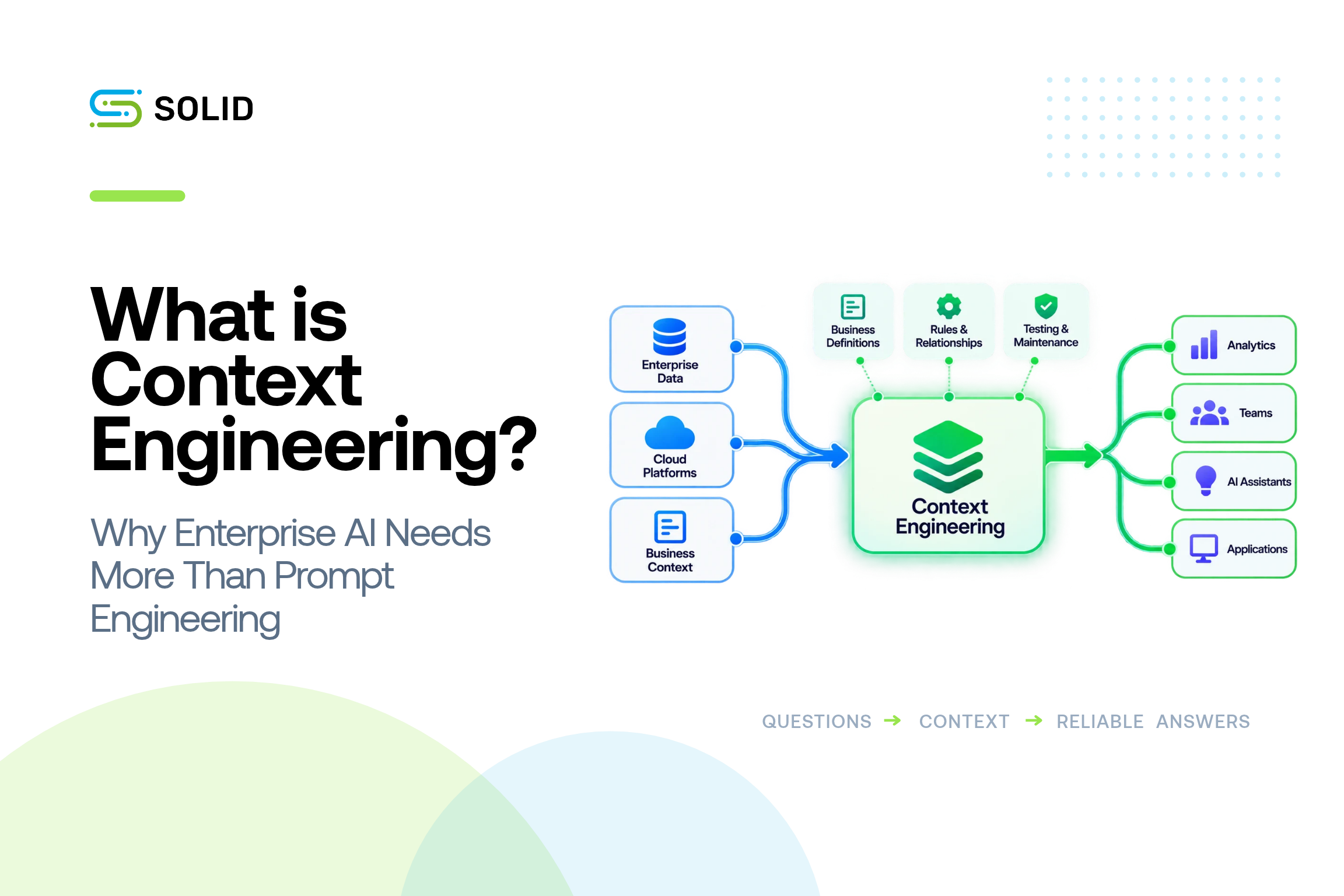
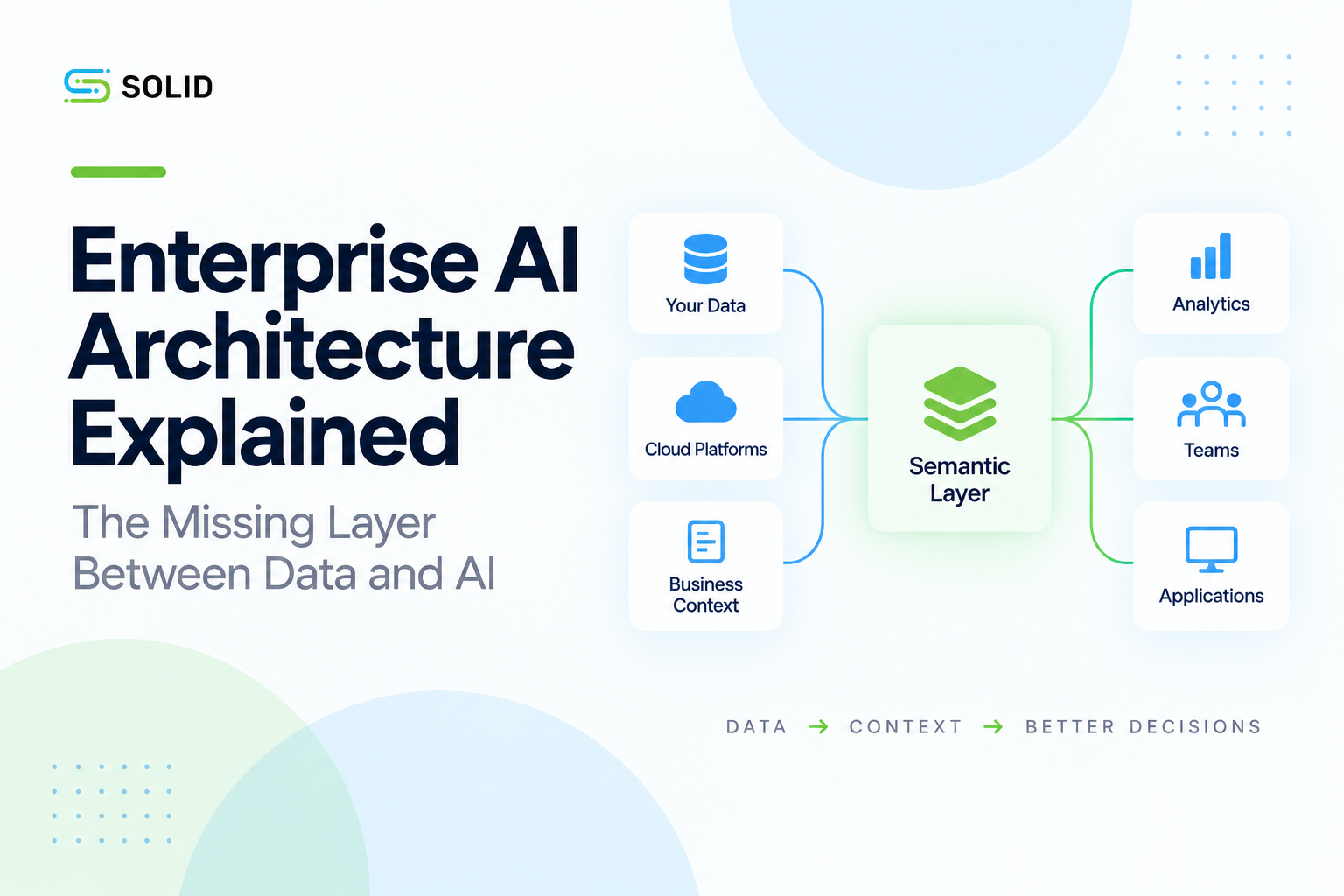
The migration itself becomes the ideal time to create a semantic layer that gives both analytics platforms and AI systems a shared understanding of the business.
This ensures that whether someone is looking at a dashboard, asking a chatbot, or building an AI agent, they're working from the same trusted definitions.
You Don't Need Perfect Data to Start
Another misconception is that AI requires perfect data.
Every enterprise has incomplete data, duplicate records, inconsistent definitions, and systems that need cleanup. Waiting until every data quality initiative is complete means waiting forever.
Successful organizations start with the data they already trust.
Most companies already have business domains that power executive dashboards, operational reporting, or financial analytics. Those trusted assets provide an ideal starting point for semantic modeling and AI.
As business value is demonstrated, organizations gain the momentum - and executive sponsorship - to improve additional domains over time.
The New Question for Data Leaders
For years, the conversation centered on one question: "When will the migration be finished?"
That is no longer the question that matters. Today's executives want to know something much simpler:"How are you delivering AI while the migration is still happening?"
The organizations that answer that question well won't be the ones that finish migration first. They'll be the ones that recognize migration and AI are no longer sequential initiatives - they're parallel strategies.
The future belongs to organizations that modernize their data while simultaneously making it accessible, understandable, and usable by both people and AI.
Ready to Deliver AI Before Your Migration Is Complete?
Modernizing your data platform doesn't mean putting AI initiatives on hold. See how Solid helps enterprises automatically create, evaluate, and maintain semantic models that give AI trusted business context across both legacy and modern data environments.
Other posts

.png)