Blog
January 29, 2026
The Death of the Generic App: How Vibe Coding is Flipping the Enterprise Script

Tal Segalov
Co-Founder & CTO

With English becoming the new programming language, Tal shares lessons on how to make vibe-coding actually work for enterprises.
For decades, enterprise software followed a predictable, albeit painful, pattern: you bought a rigid, off-the-shelf platform and spent the next three years (and millions of dollars) trying to bend your business processes to fit its “best practices.” It was like buying a one-size-fits-all suit and then having to lose weight just to button the jacket.
But as we enter 2026, that story is quickly becoming obsolete. We are witnessing the rise of Vibe Coding in the enterprise - a seismic shift where “English is the new programming language”, and custom, purpose-built apps are becoming the default, not the exception.
This isn’t just about writing code faster; it’s about a fundamental inversion of the software supply chain. We are moving from a world of scarcity (where developer time was the bottleneck) to a world of abundance (where the only bottleneck is the clarity of your intent).
From “Software as a Service” to “Software as a Vibe”
Andrej Karpathy famously coined the term “vibe coding“ to describe a world where you focus on the what and let the AI handle the how. In a startup context, this is about speed. In an enterprise context, it’s about Hyper-Relevance
We are living in a reality where a department head can “vibe” a custom procurement tool or a supply-chain tracker into existence in a few days. This disrupts the traditional SaaS model entirely. Why pay for a complex, bloated expense management solution with 900 features you don’t use, when you can vibe a tailored one that fits your workflow perfectly?
Just last week, one of my board members (!) vibe coded his own travel expense software. He didn’t want a dashboard with generic KPIs; he wanted a tool that specifically highlighted policy violations based on his company’s unique handbook and exported the exact PDF format requested by his Finance department.
But let’s not pretend it’s magic. The reality of 2026 is that while the barriers to entry have dropped, the complexity of management has risen.
The New Development Cycle: Avoiding the “Recursive Fix-It” Trap
As we’ve seen in early experiments (and as noted by observers like Alex Dorand), vibe coding isn’t just shouting at an LLM and hoping for the best. Without discipline, it leads to what we call the “Recursive Fix-This-Shit” Era. This happens when you ask an AI to build a massive system in one go, and you spend the next week in a hellish loop of fixing one bug only to create three more because the AI lost the context of the original architecture.
To succeed in 2026, enterprises are adopting a new form of Iterative AI Development
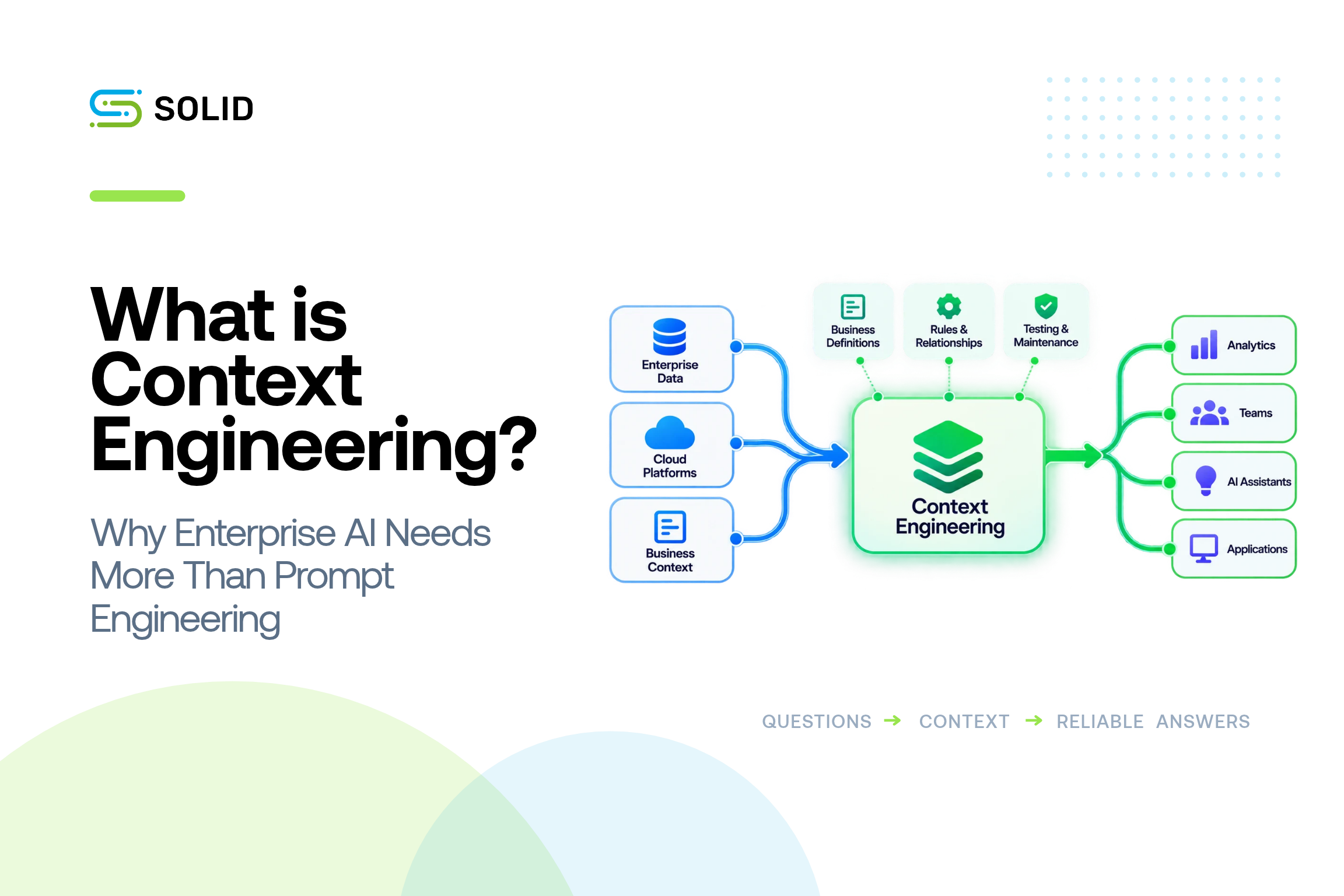
- Context Engineering Successful vibe coding requires breaking applications down into “contexts”: small, manageable chunks of logic. You don’t vibe an ERP; you vibe the “Invoice Matching Module,” then the “Vendor Approval Module.”
- The “Feature Madness” Phase: We are currently in a period of “feature madness.” Because the cost of testing a hypothesis is near zero, businesses are iterating on features every 48 hours rather than every two weeks. The definition of “agile” has shifted from “shipping code” to “shipping business value.”
- The Orchestrator Role: Developers aren’t disappearing; they are evolving into “Dev-Copilots” or Orchestrators. Their job is no longer to write the syntax but to manage the contexts - ensuring that the “Invoice Module” doesn’t hallucinate data when talking to the “Vendor Module.”
The Moat is the Infra, Not the App
As the cost of creating an application drops to near-zero, the value shifts. The moat is no longer the application code itself. it’s the cognitive architecture that allows the vibe to be accurate, secure, and useful.
If you just let 5,000 employees “vibe” apps on their laptops, you don’t get innovation; you get Shadow IT 2.0 - a chaotic swamp of unmaintained, insecure scripts. To move from “vibe-coded slop” to “enterprise-grade intelligence,” you need four pillars of infrastructure:
1. The Governed Semantic Layer
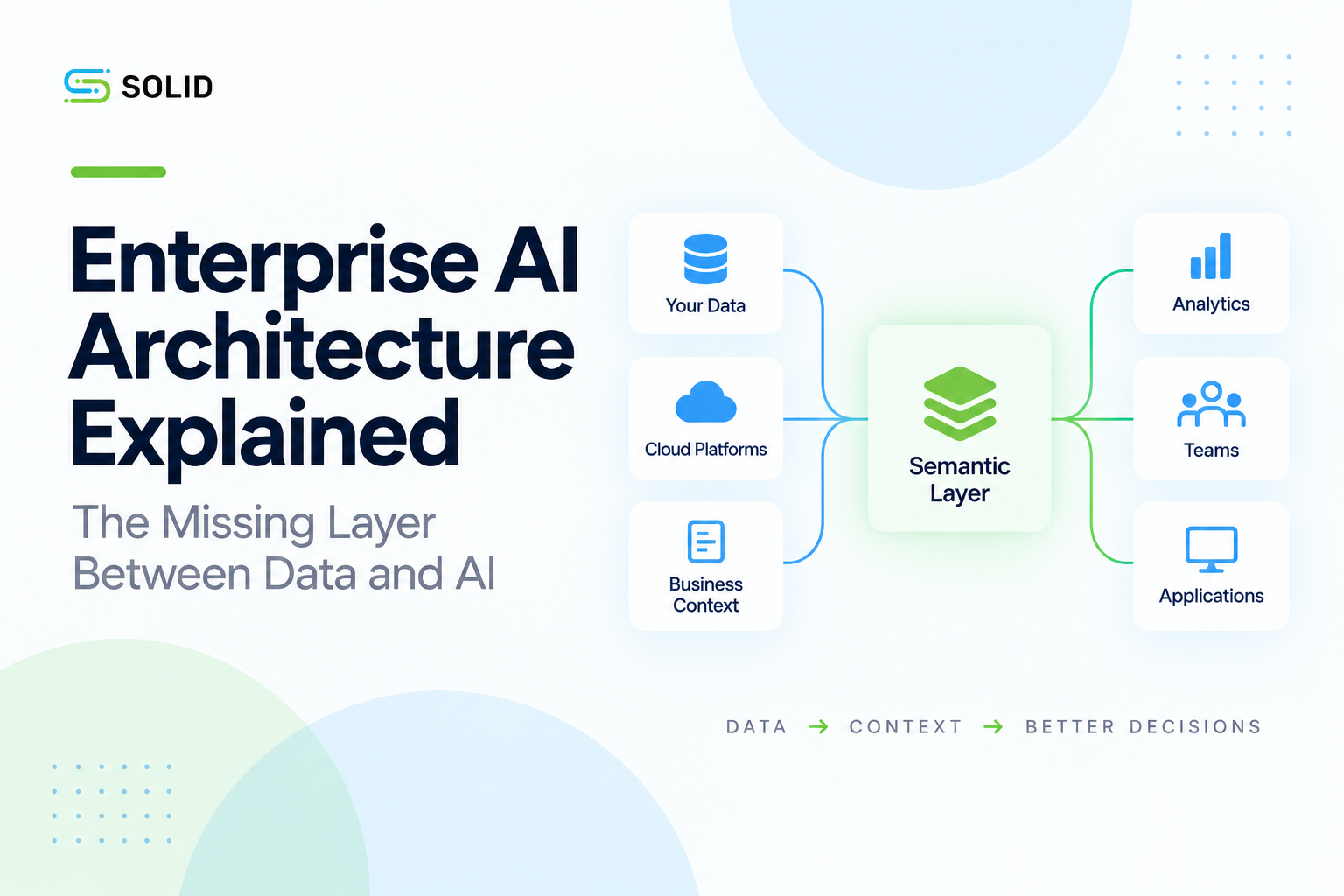
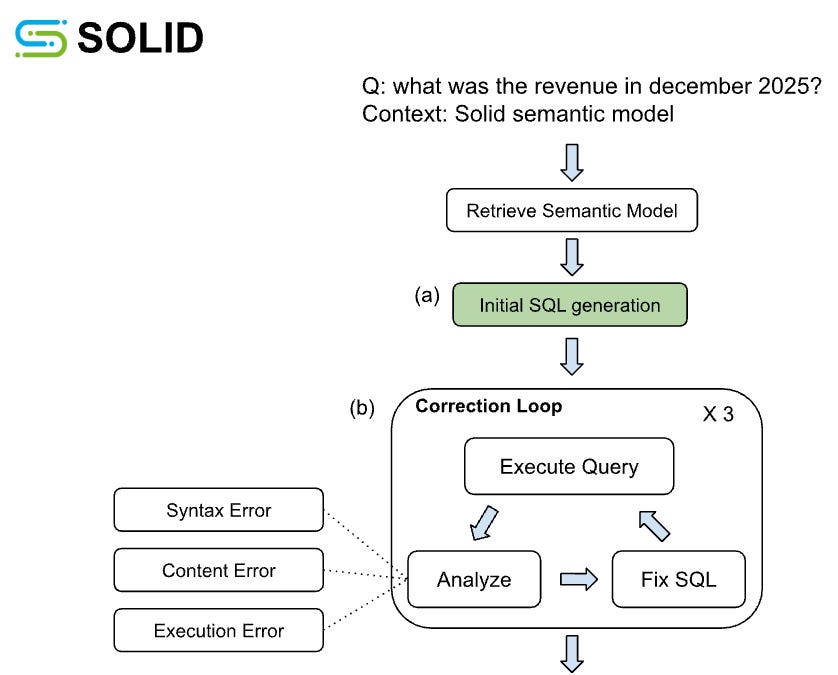
As I’ve written before, your AI is only as smart as its map. You cannot simply point an LLM at your raw SQL database and say “build me a dashboard.” It will hallucinate columns, misunderstand relationships, and calculate “Revenue” based on a schema deprecated in 2023.
Enterprises need a Data Semantic Layer - a rigorous, governed definitions layer that acts as the “Detailed Librarian.” It educates the vibe-coding engine on business logic. When a user types “show me high-value customers,” the Semantic Layer intercepts that intent and tells the AI: “High Value is defined as >$50k ARR, and Customer data lives in the ‘Global_Accounts’ table, not ‘Sales_Leads’.”
2. Built-in Governance & Private Deployment
We need a sandbox. To truly share and collaborate, enterprises need private infrastructure where vibe-coded apps can be deployed instantly without leaking proprietary logic to the public web.
Governance must be the “steering wheel” baked into the vibe-coding engine.
- Permissions: “Hey AI, build me a salary transparency tool” should be met with “I’m sorry, you don’t have access to the HR Payroll schema,” not a SQL dump of everyone’s wages.
- Compliance: Every generated app should automatically inherit the company’s SSO, audit logging, and data retention policies.
3. The “Unit Test” for Vibes: Robust Maintenance Infra
This is the most overlooked aspect of the revolution. What happens when the person who wrote that travel app leaves? Or when the underlying API changes?
We need robust testing and maintainability infrastructure. We cannot rely on “it looked good when I generated it.” (the new “it works on my machine”)
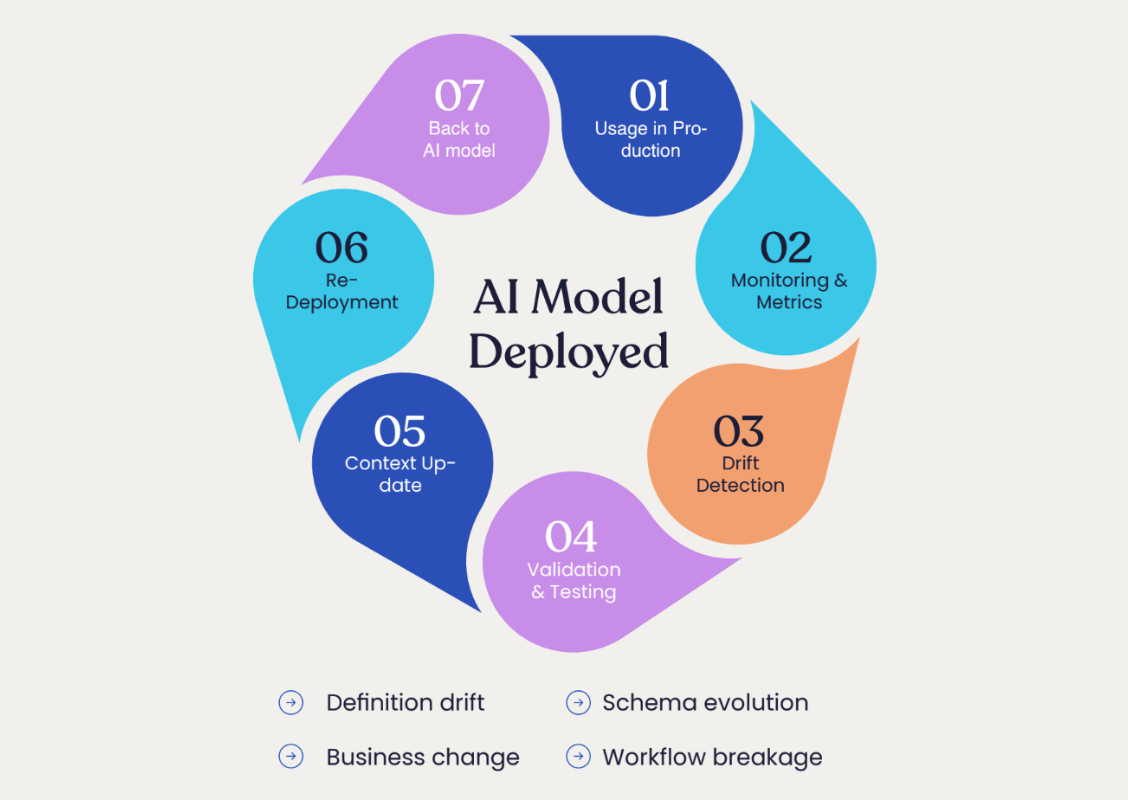
- Automated Vibe Testing: We need systems that run “regression vibes”—automatically prompting the app with standard user inputs every night to ensure the data structure hasn’t drifted or that the underlying logic is still valid.
- Self-Healing Code: The infrastructure should be able to detect runtime errors in these custom apps and feed them back into the vibe engine to auto-generate a fix, which is then presented to a human Orchestrator for approval.
4. Custom Data Stacks
Generic SaaS forces you to store data their way. Vibe coding allows you to build apps that sit on top of your data stack. The winners in 2026 are building “Interface Layers” that allow users to vibe code ephemeral UIs on top of a permanent, governed data lake (like Snowflake or Databricks). The app is temporary; the data is eternal.
The Bottom Line
The “AI-Readiness Gap“ is widening. The winners won’t be the companies that buy the most AI licenses; they’ll be the ones that architect the infrastructure to let their employees “vibe” safely.
We are moving toward what Alex Dorand calls the “Creativity Era”—a future where the AI context is so rich, and the infrastructure so robust, that the “how” truly disappears, and the “what” is the only limit.
But we aren’t there yet. Today, we are Orchestrators. If you can’t describe your business logic clearly enough for an AI to build it, or if you haven’t built the testing infrastructure to keep it running, that’s your new bottleneck.
What are you building today? Or better yet, what are you vibing?
Other posts