Blog
July 15, 2026
What Is Semantic Modeling? Why It Matters for Analytics and AI

Blair King Bader
Marketing Manager
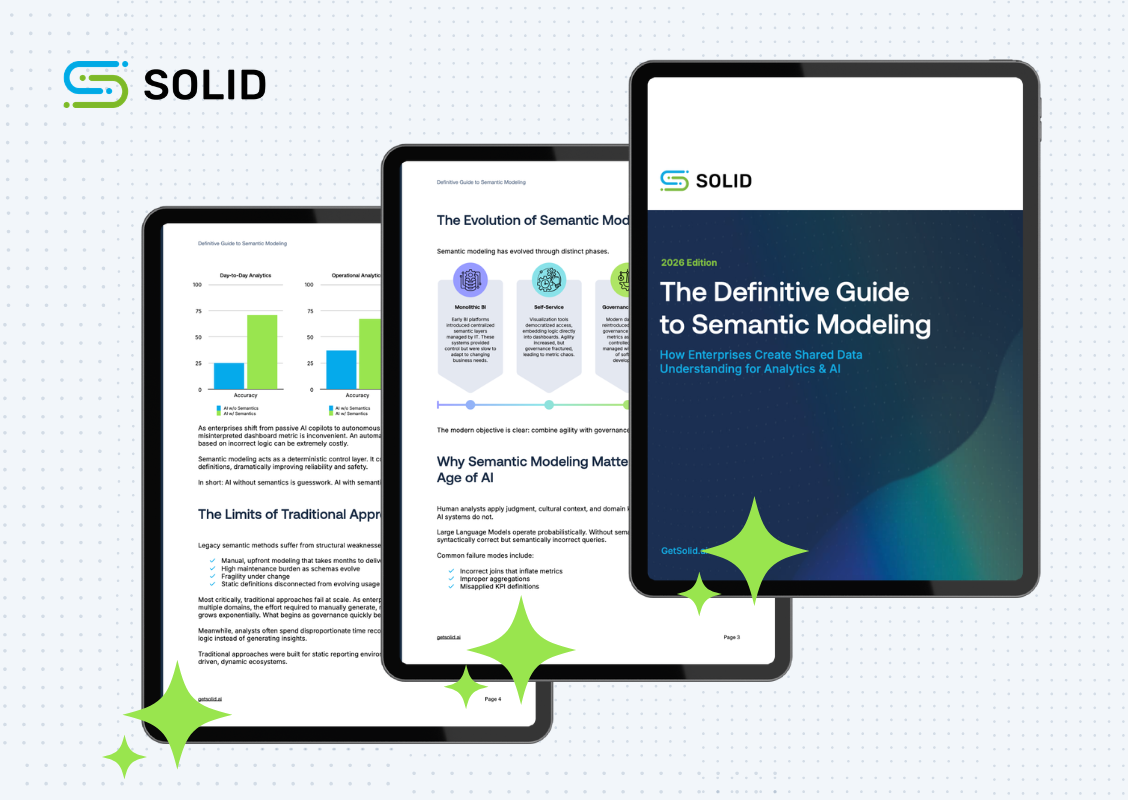
Discover why semantic modeling has become the foundation for trusted analytics and AI. Learn how shared business context eliminates metric drift, improves AI accuracy, and enables organizations to scale AI with confidence.
AI Doesn't Have a Data Problem. It Has a Meaning Problem.
Over the past decade, enterprises have invested billions in modern data platforms. Cloud data warehouses, ELT pipelines, and self-service analytics have made data more accessible than ever before.
Yet as organizations begin deploying AI across the enterprise, a new challenge has emerged: AI doesn't fail because data is missing. It fails because it doesn't understand what the data means.
An AI assistant can't tell the difference between Finance's definition of revenue and Sales' definition. It doesn't know which customers should be excluded from churn calculations. It can't infer business rules that only exist in dashboards, documentation, or someone's memory.
As organizations move beyond AI experimentation into production, shared business context has become one of the biggest barriers to trustworthy AI.
The Hidden Challenge Behind Enterprise AI
Most organizations have solved the data access problem but very few have solved the data understanding problem.
Over time, business logic becomes scattered across dashboards, SQL queries, spreadsheets, documentation, and individual teams. Metrics evolve. Definitions drift. New AI tools inherit all of that inconsistency.
The result is familiar:
- Different teams report different numbers for the same KPI.
- Analysts spend hours reconciling metrics instead of generating insights.
- AI produces answers that sound correct but aren't grounded in trusted business logic.
- Every new AI initiative creates additional maintenance work for already overloaded data teams.
The issue isn't data quality alone. It's the lack of a shared understanding of what the data represents.
Why Semantic Modeling Matters
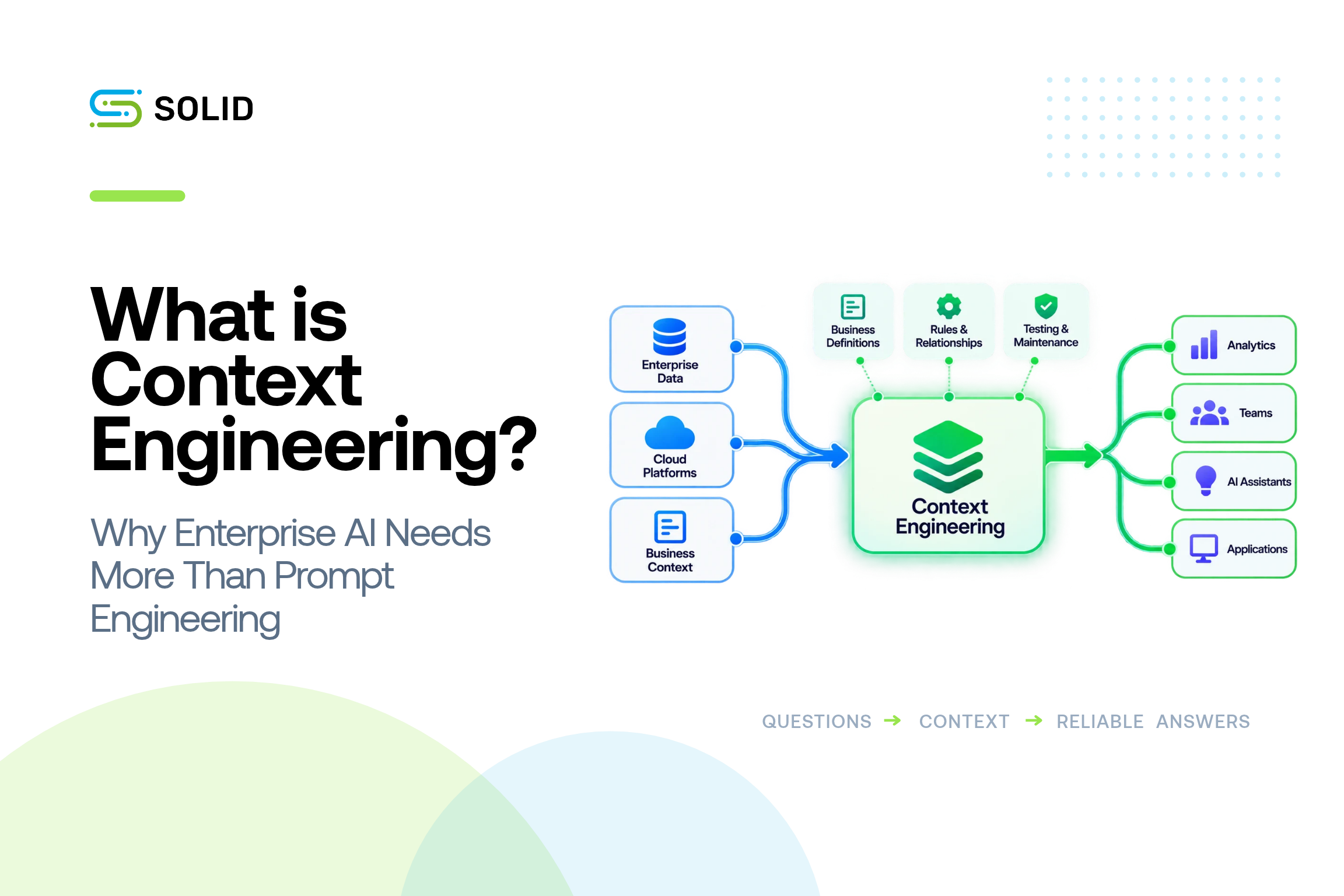
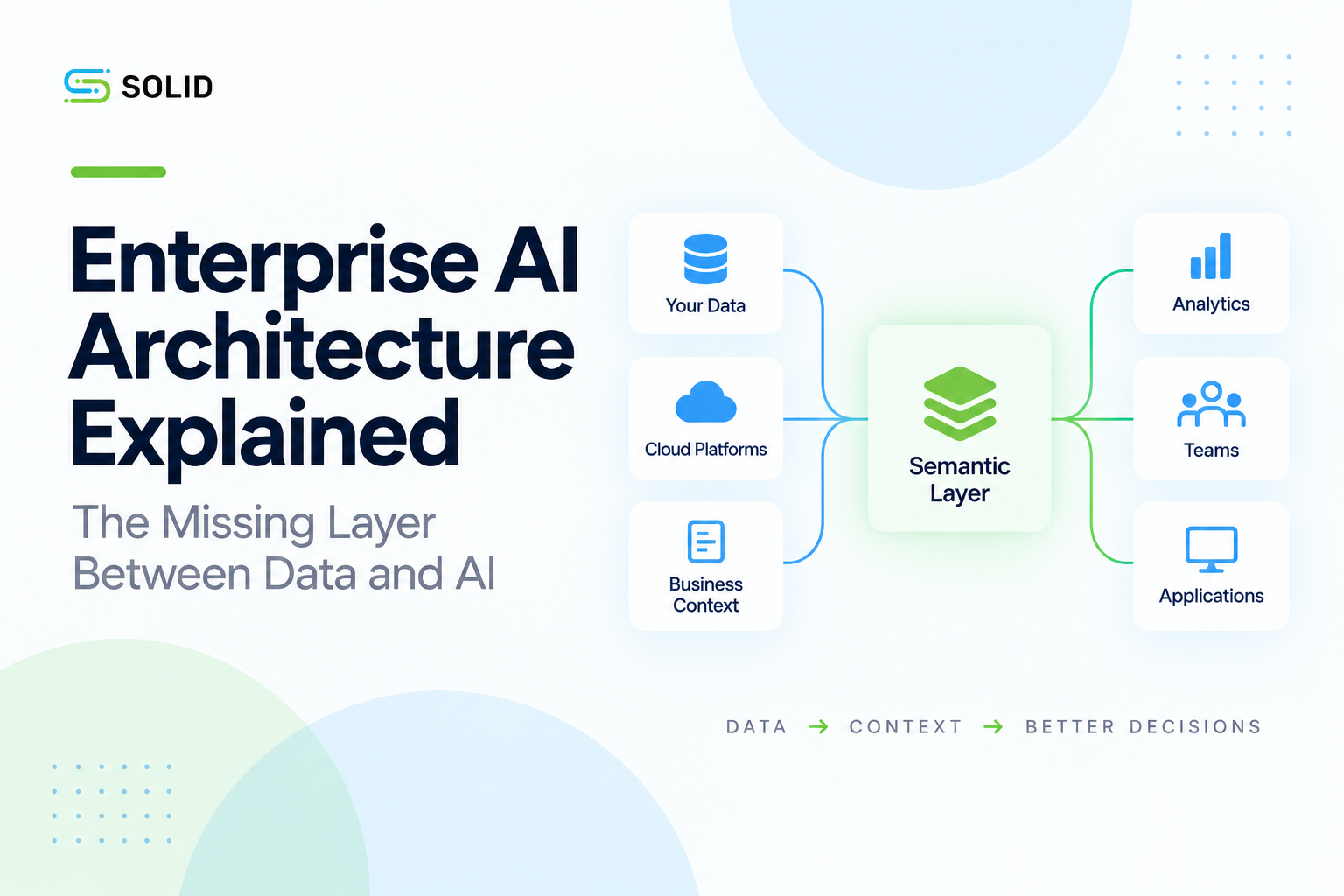
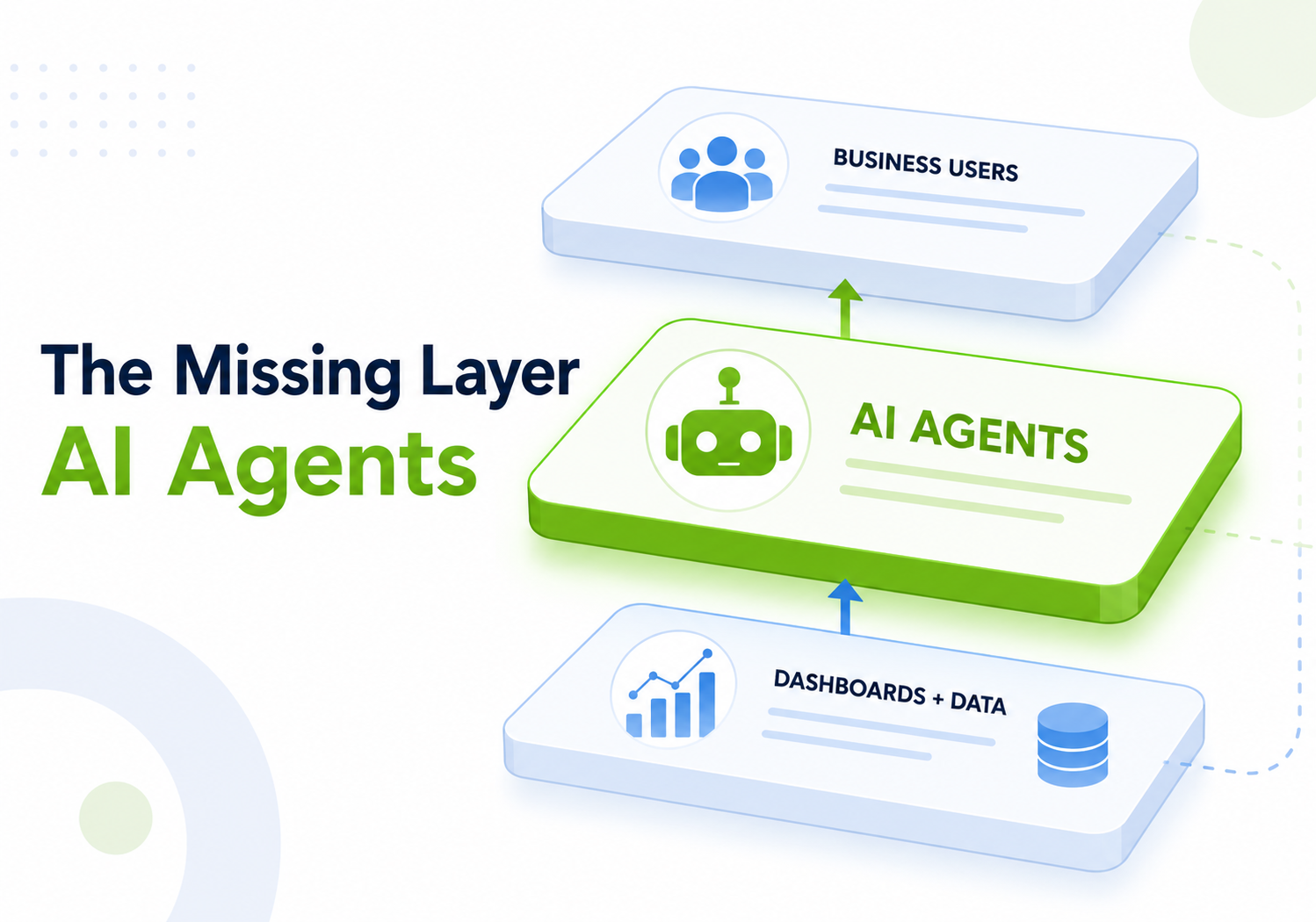
Semantic modeling creates a governed layer of business meaning that sits between raw data and the applications that consume it.
Instead of forcing every dashboard, report, analyst, or AI agent to recreate business logic independently, semantic models define metrics, entities, relationships, and business rules once - and make those definitions available everywhere.
That consistency benefits both people and AI. Business users gain trusted metrics. Analytics teams spend less time answering the same questions repeatedly. AI agents receive the context they need to generate reliable answers instead of making educated guesses.
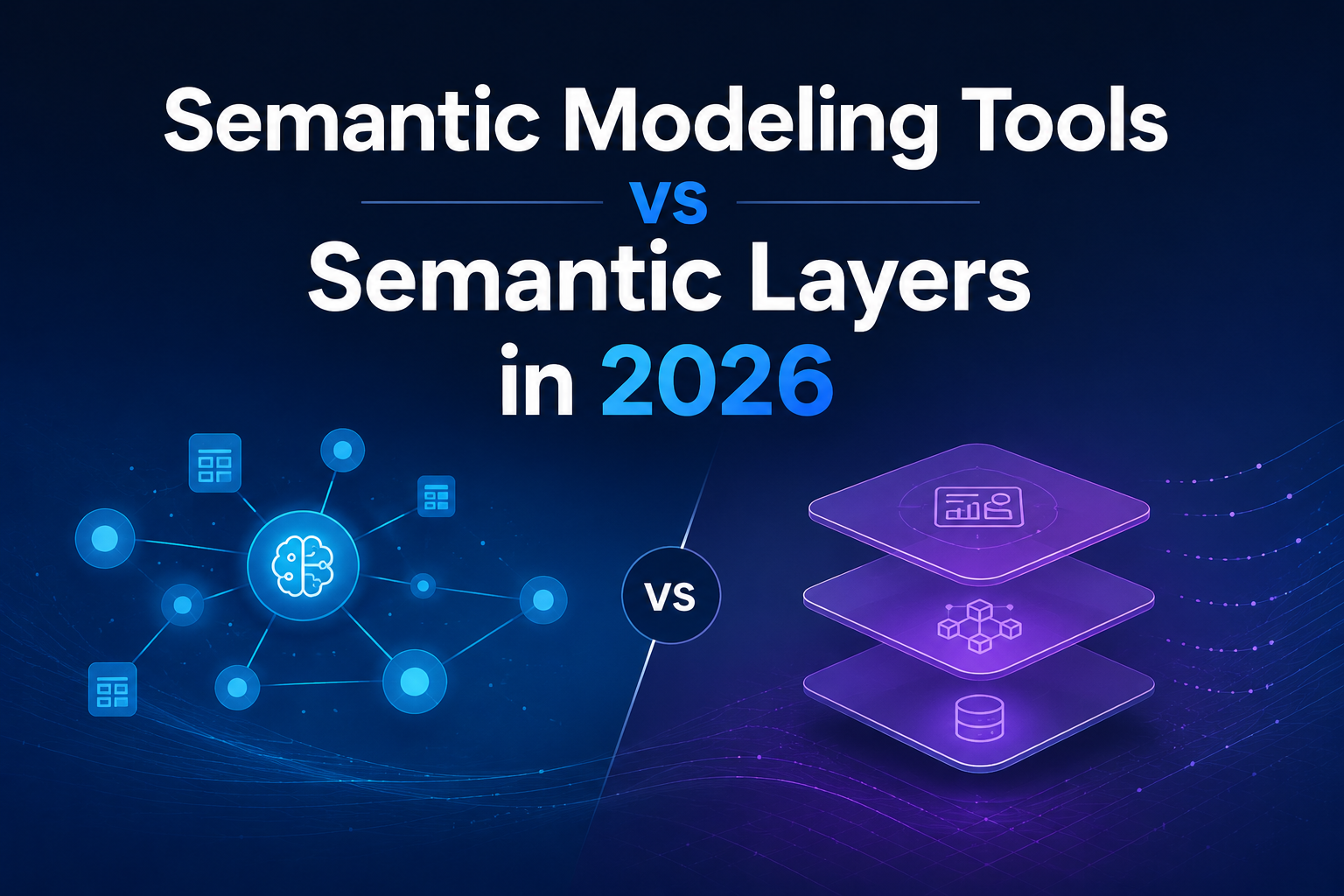
The Next Evolution of the Semantic Layer
Traditional semantic layers helped standardize reporting but modern semantic modeling goes much further.
Today's platforms are designed to continuously generate, validate, and maintain semantic models as data changes. They integrate across analytics tools, AI platforms, and enterprise workflows while combining automation with human oversight to ensure business definitions remain accurate over time.
As AI adoption accelerates, semantic modeling is evolving from a BI feature into foundational enterprise infrastructure.
Learn More
If you're evaluating AI initiatives, modernizing your analytics stack, or simply trying to create more consistent business definitions across your organization, understanding semantic modeling is becoming essential.
Download our free guide, The Definitive Guide to Semantic Modeling, to learn:
- Why traditional approaches struggle in the age of AI
- How modern semantic modeling differs from legacy semantic layers
- What leading organizations are doing to build AI-ready data foundations
- How semantic modeling improves analytics, governance, and AI reliability
- The emerging trends shaping the future of semantic infrastructure
Whether you're a data leader, analytics engineer, AI architect, or executive responsible for AI strategy, this guide provides a practical framework for building trusted data foundations that scale with your business.
Download The Definitive Guide to Semantic Modeling and learn why shared business context is becoming one of the most important investments organizations can make for the future of AI.
Other posts

.png)
.png)