Blog
February 11, 2026
The Complexity Paradox: Why AI is Creating More Work, Not Less

Tal Segalov
Co-Founder & CTO
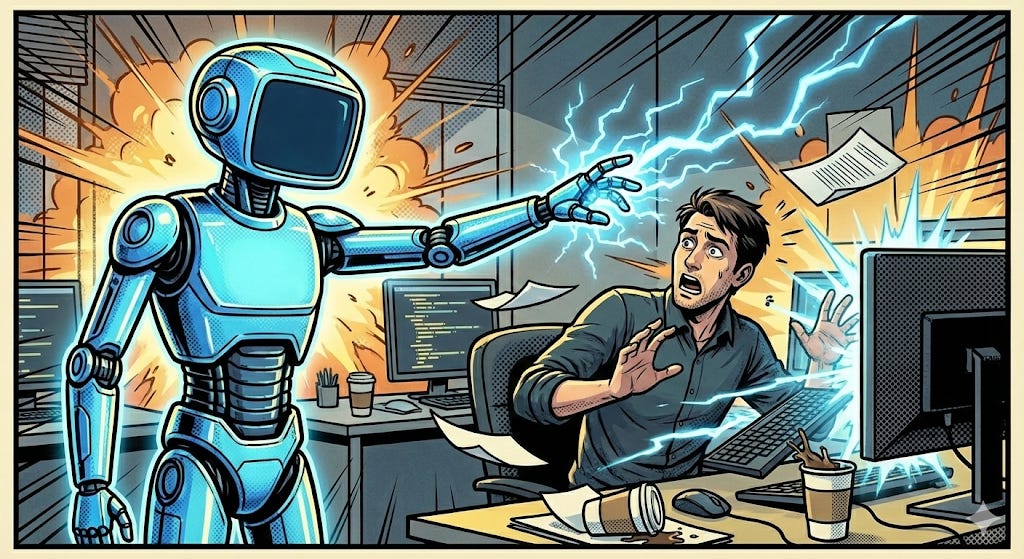
The bots are here to take our jobs? Tal Segalov, Solid's CTO & Co-Founder, thinks otherwise.
If you listen to the doom-scrolling narrative on your favorite social network, the writing is on the wall: AI is coming for us, white-collar workers. We are told that software engineers, analysts, and data employees are the modern-day weavers awaiting the mechanical loom.
But if you look at the actual data, a very different story emerges.
A recent report from The Economist highlights a fascinating paradox. Since the public release of ChatGPT in late 2022—the exact moment the “AI replacement” clock supposedly started ticking—America hasn’t shed white-collar jobs. It has added roughly 3 million of them.
Even more specific to our industry: despite the rise of tools that can write code and query data, the number of software developers has grown by 7%. Roles that combine technical expertise with oversight, like project managers and information-security experts, have seen employment rise by nearly 30%
Why? If AI can write the code and run the analysis, why are we hiring more people to do it?
The answer lies in a fundamental phase shift in technology. We aren’t seeing the end of the technical worker; we are seeing the birth of the Architect Era.
The SaaS Lesson: Conservation of Complexity
To understand what’s happening, we have to look back at the last major phase shift: the rise of SaaS.
Before the cloud, deploying software was a physical, logistical nightmare. You needed server rooms, cooling systems, and armies of IT staff just to keep the lights on. Then came SaaS. Suddenly, you could spin up a CRM or an ERP with a credit card.
The narrative back then was similar: “This will make IT departments obsolete.”
Did IT departments disappear? No. They exploded in size and scope.
SaaS made deploying software simple, but it made the architecture infinitely more complex. Instead of one monolithic system, companies suddenly had 50 disjointed applications that needed to talk to each other. The complexity didn’t vanish; it moved up the stack. We needed fewer people to rack servers, but significantly more people to integrate APIs, manage data pipelines, and architect the ecosystem.
We are seeing the exact same pattern with AI, but on a much larger scale.
From Syntax to Semantics
Generative AI has effectively driven the cost of syntax to zero. Writing a Python script, generating a simple SQL query, or building a React component is now a commodity task.
But just as SaaS created a sprawl of applications, AI is creating a sprawl of logic and agents.
When you can “vibe code” a new feature in an hour, or when a business user can spin up a custom “digital employee” to handle procurement, you aren’t simplifying the enterprise—you are introducing a new layer of chaos. You are building a complex, adaptive system where thousands of non-deterministic agents are interacting with your data and your customers.
This doesn’t remove the need for technical talent. It demands a higher tier of it.
We are moving away from the era of the “Builder”—the person who manually types the syntax—and into the era of the Orchestrator
The New Job Description
In this new world, the value of a technical worker isn’t measured by lines of code written, but by the clarity of the architecture they design.
- For Developers: You aren’t just writing functions anymore. You are acting as a “Bot Manager,” orchestrating agents to ensure they don’t hallucinate or break the build. You are building the “Cognitive Architecture” and the testing infrastructure that keeps the system sane.
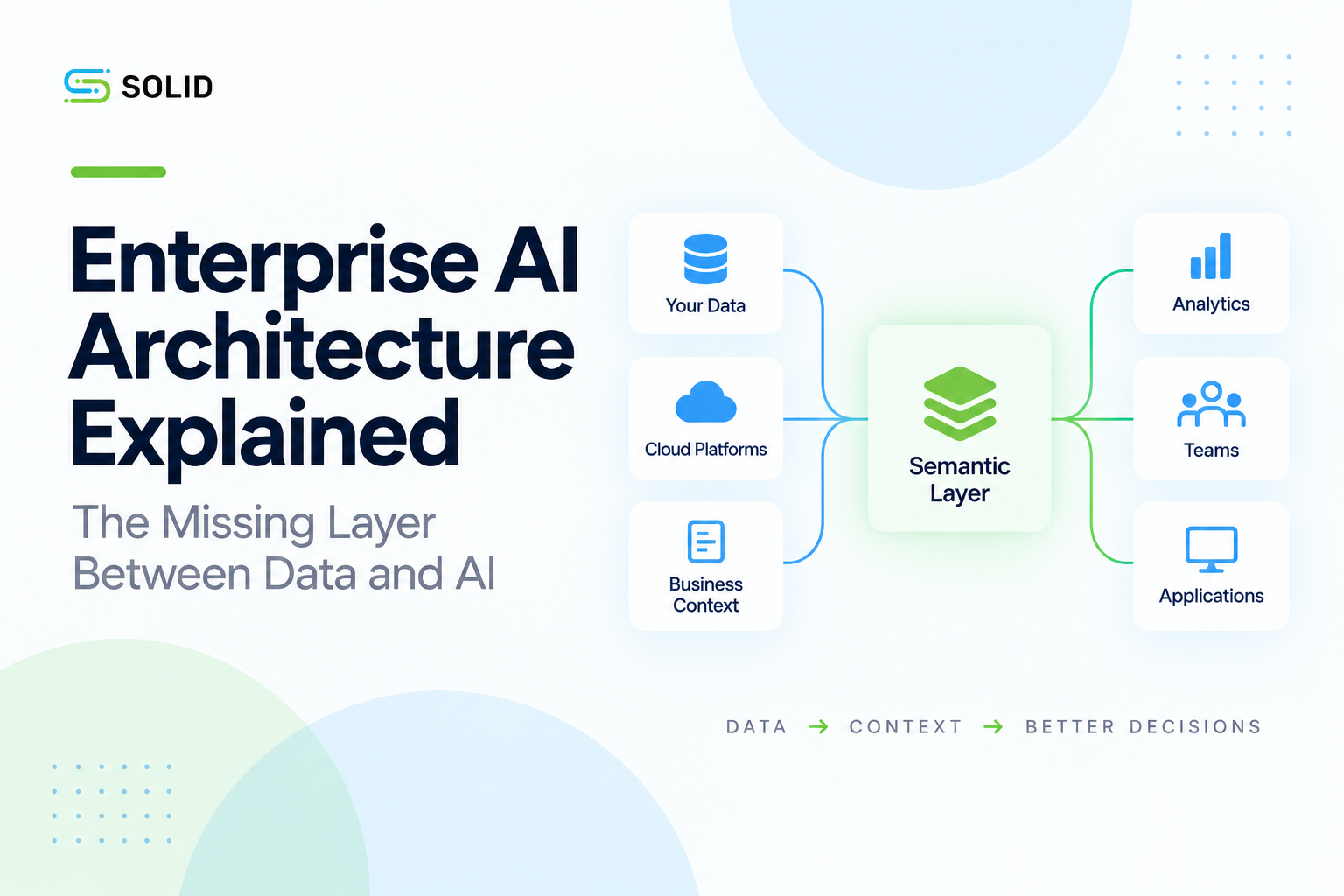
- For Analysts: You aren’t just writing SQL. You are building the Semantic Layer—the “Detailed Librarian” that teaches the AI the difference between ‘revenue’ and ‘bookings’ so it doesn’t lie to the CEO.
The systems we are building today are orders of magnitude more complex than what we built five years ago because AI allows us to dream bigger. We are no longer limited by how fast we can type; we are limited by how well we can structure the logic, govern the data, and manage the system’s behavior.
The Phase Shift
The Economist notes that while routine back-office work is shrinking, “roles that combine technical expertise with oversight and co-ordination” are thriving.
This is the phase shift. AI is an industrial revolution for logic. It allows us to build systems that were previously impossible due to the constraints of human coordination and “mythical man-months.”
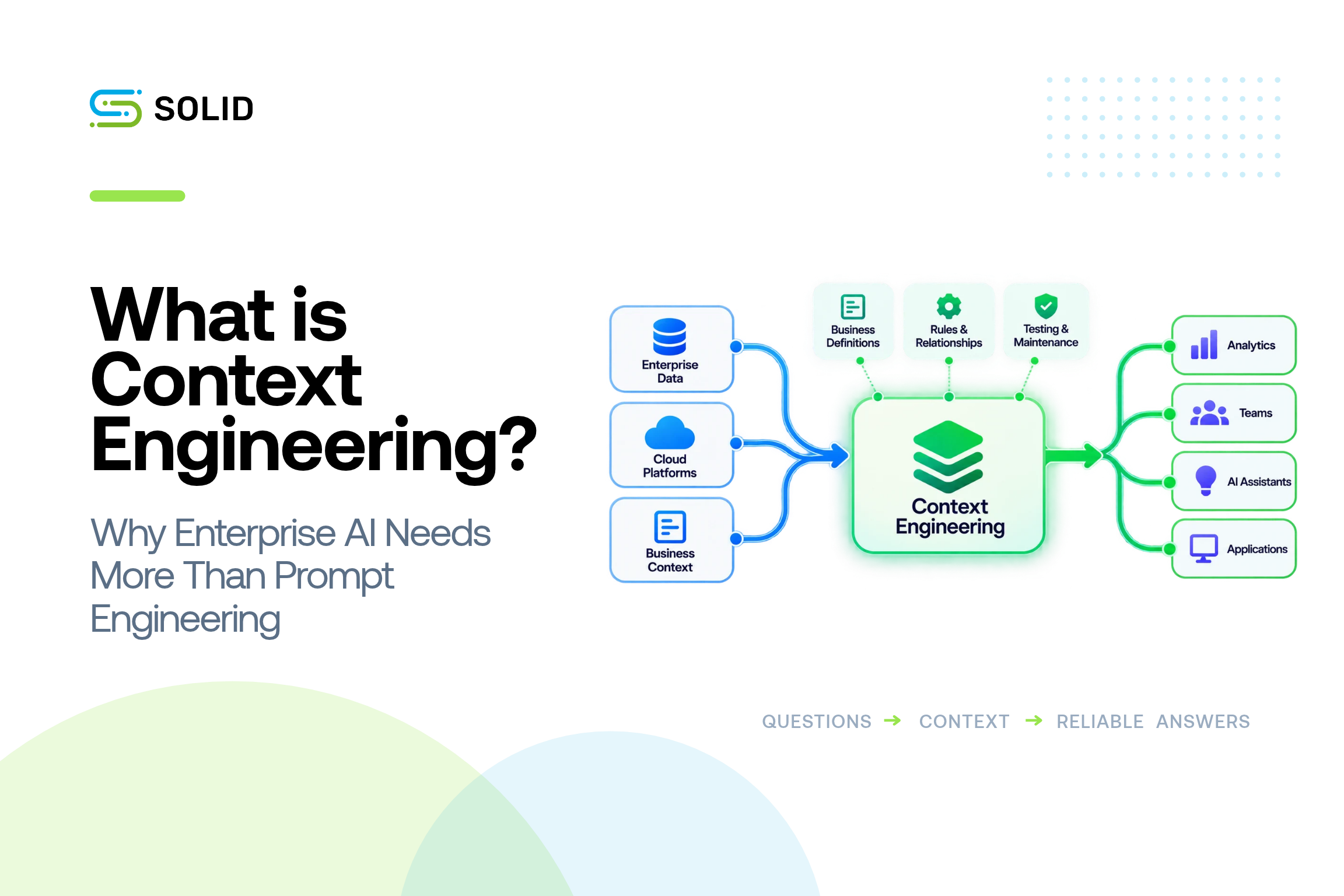
But complex systems require complex management. They require rigorous governance, deep context engineering, and a human-in-the-loop who understands the “Ground Truth” of the business.
The future of work isn’t about competing with the machine. It’s about architecting the factory that the machines run in. The demand for people who can do that isn’t going away—it’s just getting started.
Other posts

.png)