Blog
August 6, 2026
The Hidden Cost Problem in AI Analytics

Blair King Bader
Marketing Manager
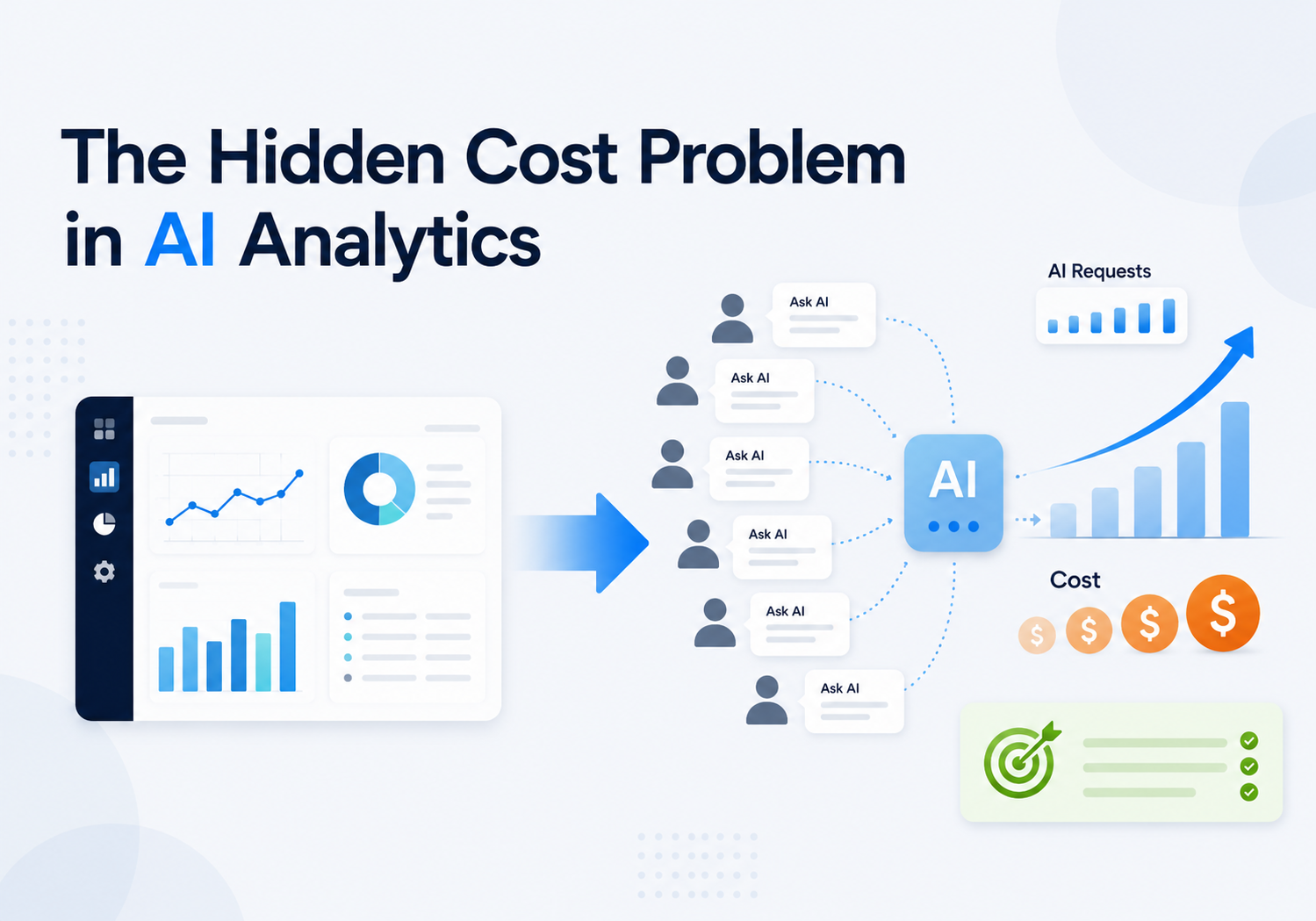
AI is making analytics more accessible, but it's also changing the economics of how organizations consume data. This article explores the hidden costs of AI-driven analytics, why not every question should be answered by AI, and how data leaders can build a more efficient analytics strategy.
For the last two years, most conversations about AI analytics have focused on capability: Can AI generate SQL? Can it answer business questions? Can it replace dashboards? But as more organizations move from pilots to production, a different question is emerging: What happens when everyone starts using it?
That's where the hidden cost problem begins.
The Shift from Fixed Costs to Variable Costs
Traditional BI tools are relatively predictable. You pay for licenses, infrastructure, and administration. Whether users view a dashboard 10 times or 10,000 times, the economics are generally understood.
AI changes that model.
Every prompt, query, and model call has a cost attached to it. The more successful your deployment becomes, the more usage grows - and often, the more costs grow with it.
For many data leaders, that's a new budgeting challenge.
The "100 People Asking the Same Question" Problem
Imagine 100 employees want to know last quarter's revenue. In a traditional BI environment, they open the same dashboard. In an AI environment, they may all ask the same question separately.
The result? The organization could end up paying to generate essentially the same answer 100 times.
This is where the conversation around AI analytics needs to evolve. The question isn't just whether AI can answer a business question. It's whether AI should answer that question every single time.
Not Every Question Needs AI
AI is incredibly valuable for exploratory work.
Questions like:
- Why did churn increase?
- What changed in claims volume?
- Which customers are at risk?
These require investigation and follow-up questions. AI shines in these scenarios.
But some requests are repetitive:
- Weekly KPI updates
- Executive scorecards
- Regulatory reporting
- Standard operational metrics
For these use cases, dashboards and reports still serve an important purpose.
The Future Isn't Dashboards or AI
Many organizations frame the discussion as a choice between traditional BI and conversational analytics.
That's the wrong comparison.
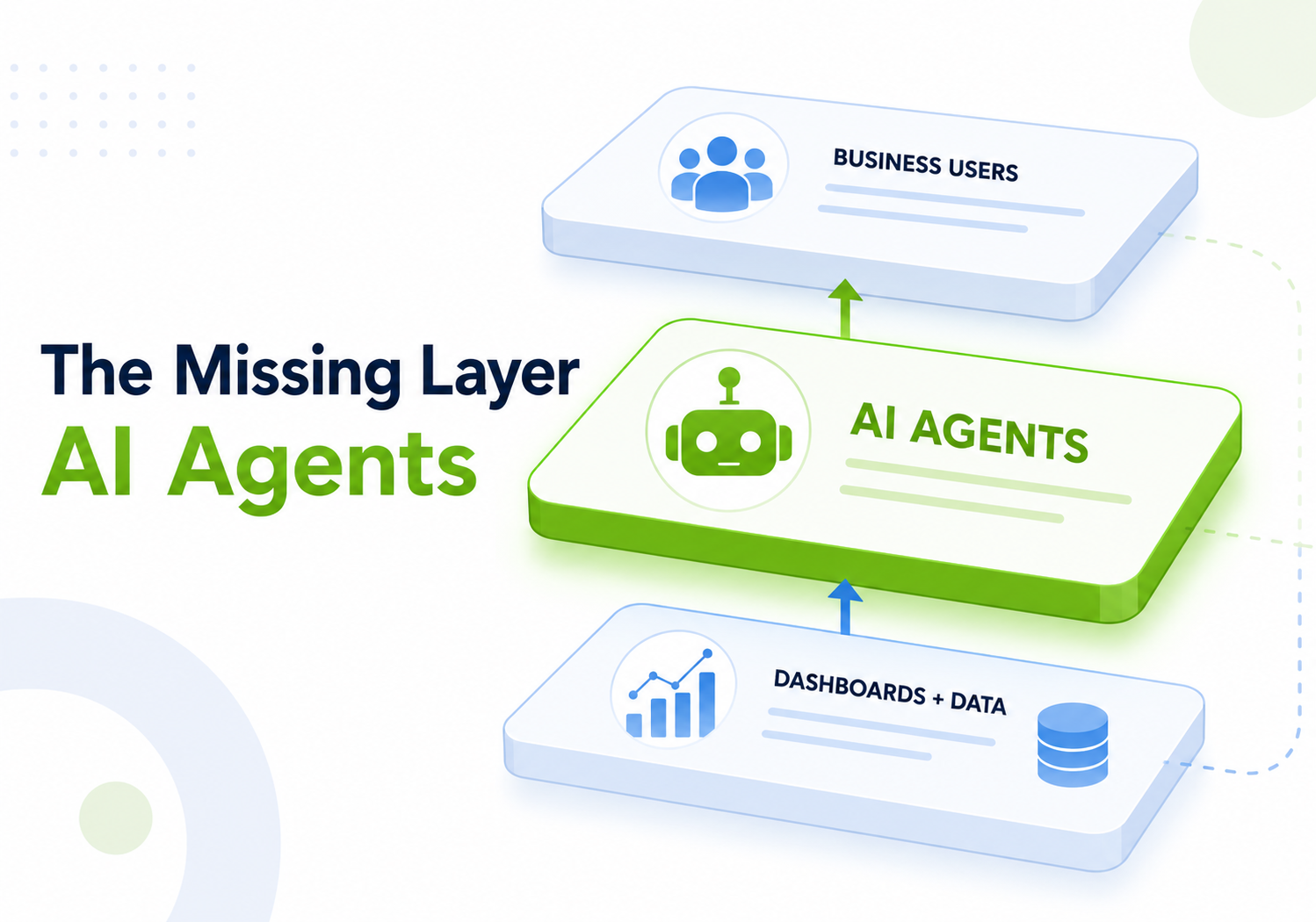
The most effective analytics strategies will likely include three layers:
- Dashboards for standardized metrics and KPIs.
- AI agents for recurring analysis and automated reporting.
- Conversational analytics for exploration and ad hoc questions.
Each serves a different purpose.
Why This Matters
The organizations that get the most value from AI won't be the ones that route every question through an LLM.
They'll be the ones that thoughtfully decide:
- Which questions should be standardized?
- Which analyses should be automated?
- Which requests truly require AI?
That distinction improves both user experience and cost efficiency.
The Real Competitive Advantage
As AI analytics matures, accuracy won't be the only differentiator.
Efficiency will matter too.
The companies that succeed will build systems that deliver trusted answers without unnecessary complexity, duplicated work, or runaway costs.
Because the future of analytics isn't just about getting answers faster. It's about getting the right answers in the most scalable way possible.
Other posts