Blog
September 16, 2026
Enterprise AI Architecture Explained: The Missing Layer Between Data and AI

Allison Parlett
Marketing Associate
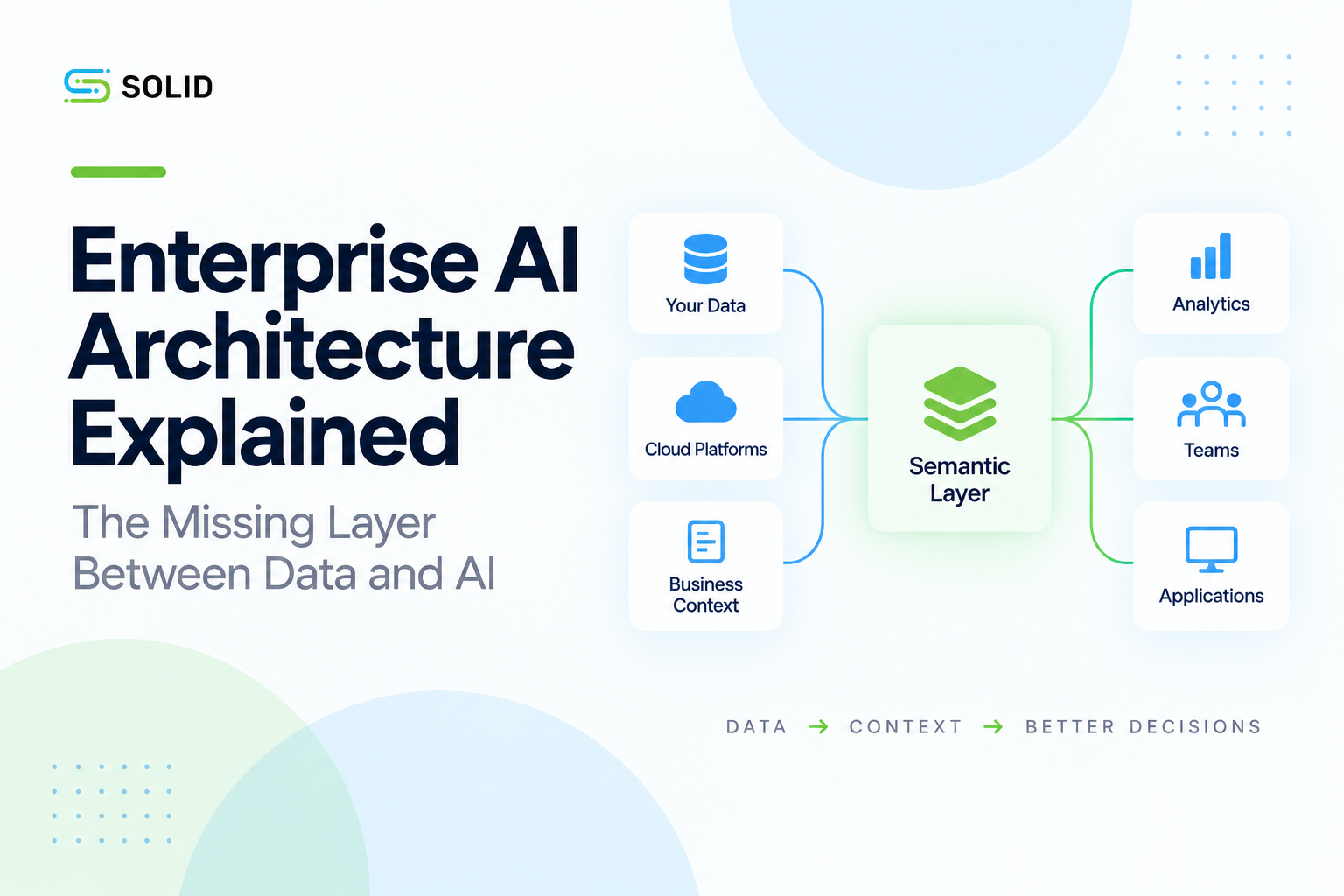
Enterprise AI needs more than access to data. It needs the business context to understand what that data actually means. Learn where the semantic layer fits into enterprise AI architecture, how it gives AI applications consistent business definitions, and why testing and maintaining semantic models is critical for getting reliable answers.
A sales leader asks an AI assistant, "What was our revenue last quarter?" The assistant connects to the company's data warehouse, generates a query, and returns a number. Everything appears to work.
But finance uses net revenue, sales tracks gross revenue, and the company follows its own fiscal calendar. Without those definitions, the assistant may retrieve the correct records and still produce the wrong answer.
This is a challenge organizations face when connecting AI applications to enterprise data. The infrastructure provides access to information, but it doesn't necessarily explain what that information means. The missing piece is business context. A semantic layer helps connect enterprise data to the definitions and rules needed for AI to interpret it correctly.
What Is Enterprise AI Architecture?
Enterprise AI architecture describes how an organization's data systems, AI models, applications, and supporting controls work together. It typically includes several components:
- Data infrastructure: Warehouses, lakehouses, and databases that store and process information.
- Data integration: Processes that bring information together from different systems.
- AI models and applications: Technology that allows people to ask questions, analyze information, and generate reports.
- Governance and security: Controls that manage access, protect sensitive information, and support appropriate use.
These components provide the technical foundation, but they don't automatically explain how an organization defines revenue, measures customer retention, or calculates profitability.
Those definitions may already exist in dashboards, SQL queries, documentation, or the knowledge of individual teams. The challenge is making them available to applications in a consistent way.
The Role of a Semantic Layer
A semantic layer connects technical data structures to the business concepts people use every day. It defines how information should be interpreted, including:
- Metrics: Revenue, profit, customer retention, and other business measures.
- Calculations: Rules that determine how each metric is calculated.
- Relationships: Connections between customers, products, orders, and transactions.
- Business terminology: Shared definitions used across departments.
- Reporting rules: Relevant dates, filters, and classifications.
Consider the revenue example. Information may be distributed across separate tables containing orders, payments, refunds, and customer records. A semantic model can define how those records relate to one another and which calculation represents the company's revenue metric.
These definitions also determine which records should be included in an answer. For example, a semantic model can establish rules to exclude test accounts from customer counts, prevent canceled orders from being counted toward revenue, and define what qualifies as a customer.
One department may count anyone who creates an account as a customer, while another only counts people who complete a purchase. A shared definition helps ensure both departments use the same meaning when analyzing customer data.
Applications designed to use that model can reference established definitions rather than independently interpreting the underlying tables. This helps reduce the risk of different applications using conflicting calculations for the same business question.
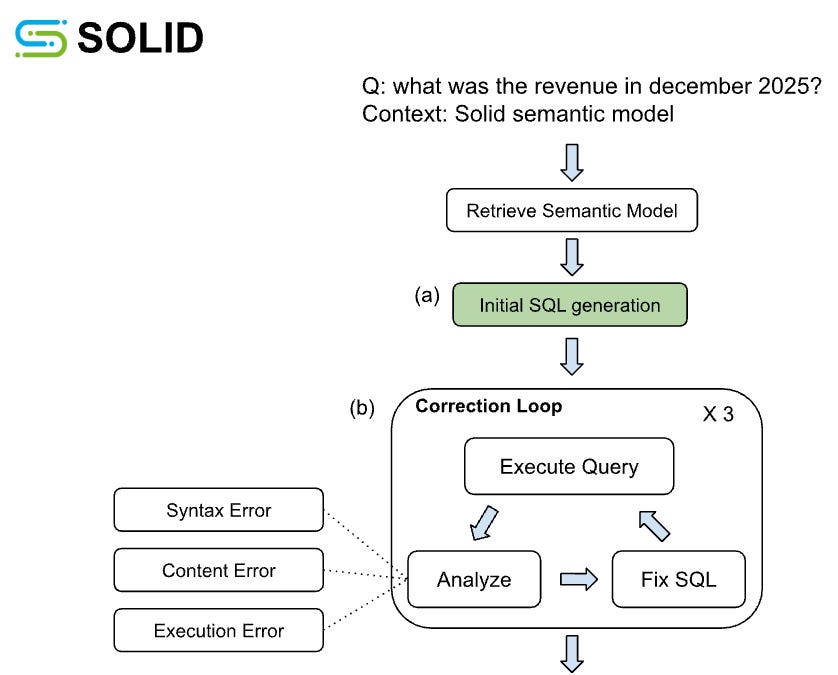
A query can run successfully and still answer the wrong question if it uses the wrong metric or reporting rules. A semantic layer provides the business context needed to reduce that risk.
Where Does the Semantic Layer Fit?
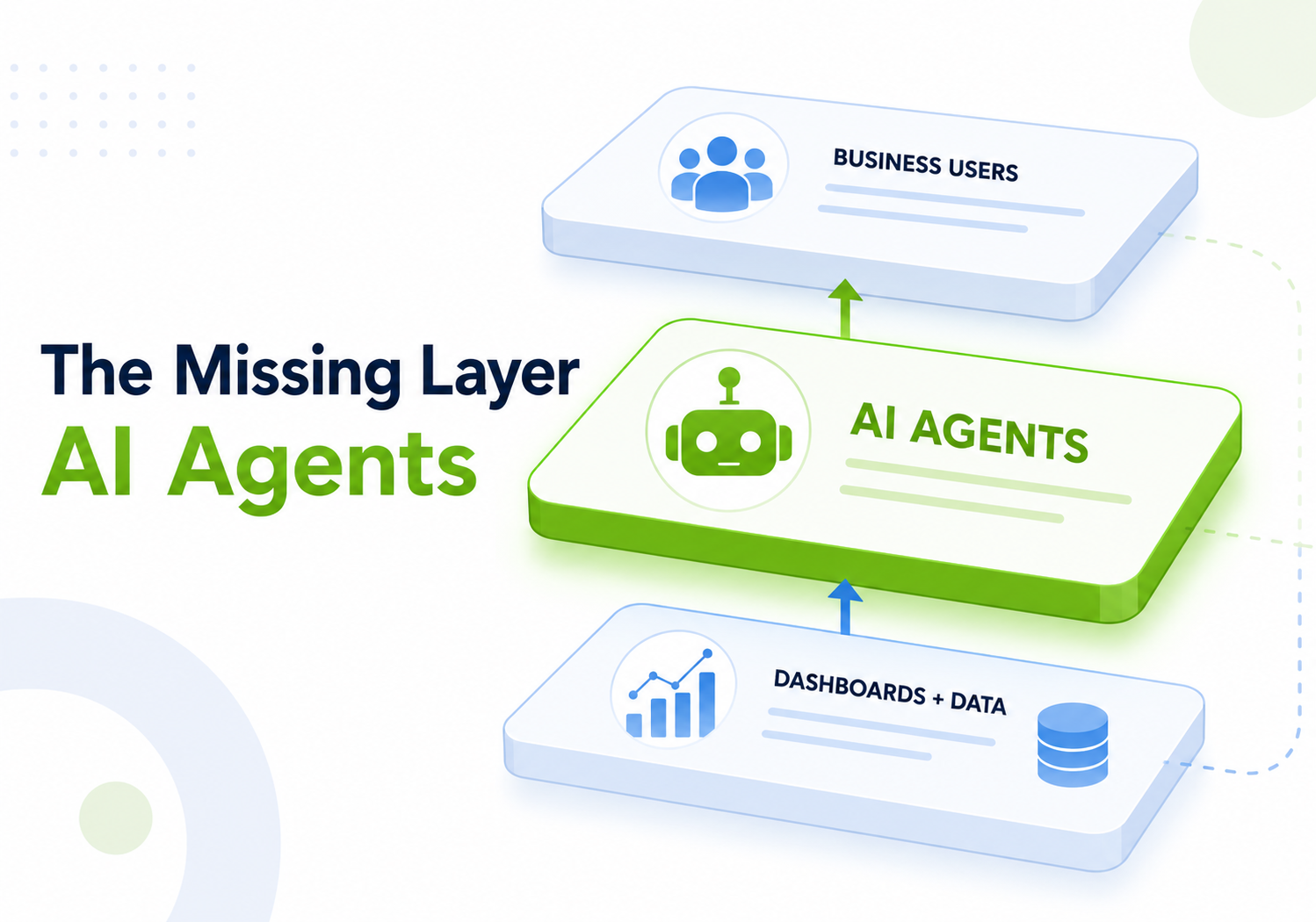
A simplified enterprise AI architecture can be viewed as three connected parts.
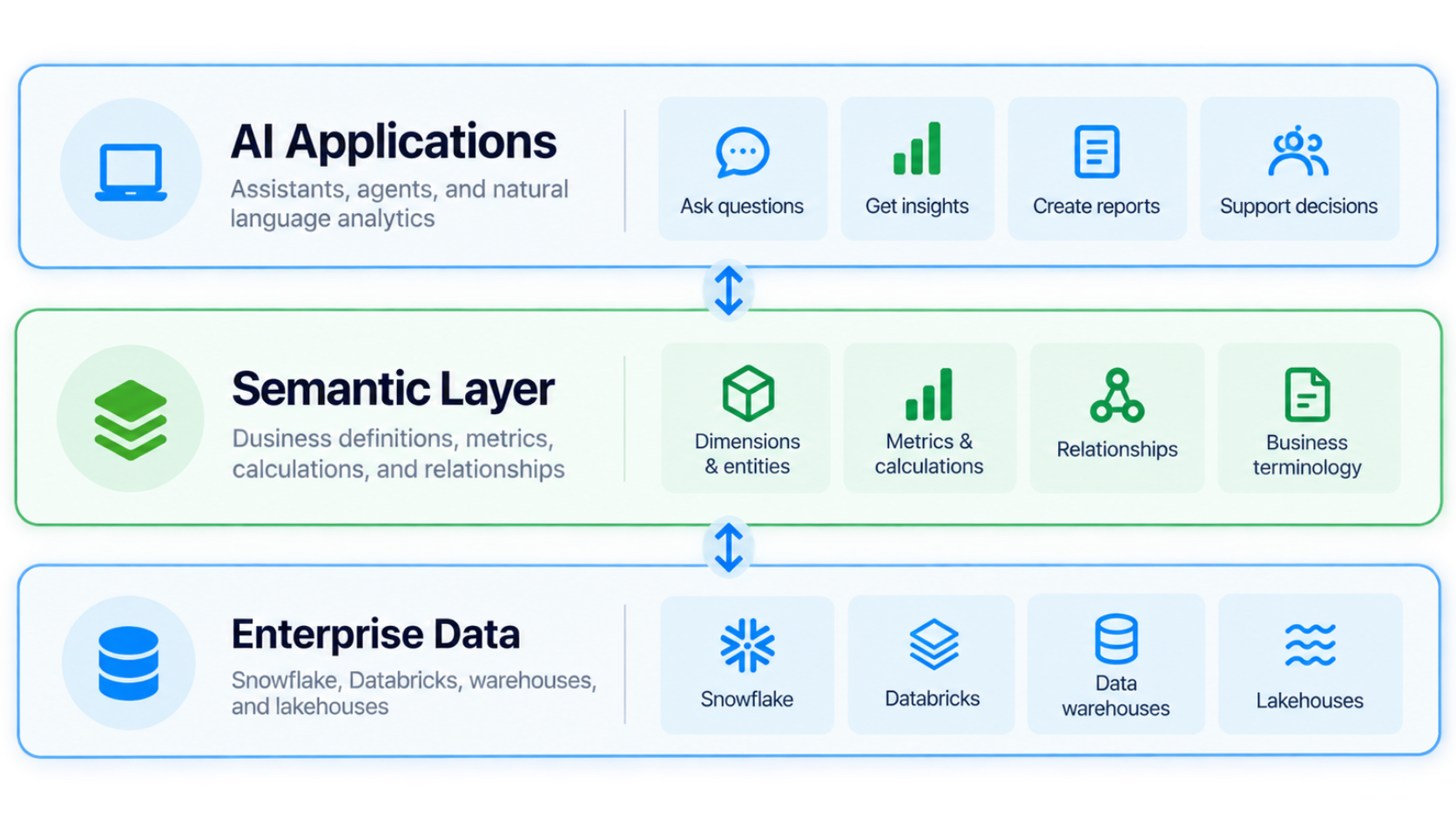
Figure 1. A simplified architecture showing how a semantic layer can provide shared business definitions to AI applications. Actual implementations vary.
Enterprise AI architecture showing AI applications, a semantic layer containing business context, and enterprise data.
Enterprise data platforms such as Snowflake and Databricks provide infrastructure for storing and processing information. The semantic layer defines how that information relates to the business, allowing applications designed to use it to reference established definitions when retrieving and interpreting data.
The semantic layer doesn't replace the data warehouse or AI model. It provides business meaning that can be reused across compatible applications while working alongside existing security, governance, and data quality processes.
Why Semantic Models Need Testing and Maintenance
Generating a semantic model is becoming easier, but creating one doesn't automatically mean it's correct.
A model may contain the right tables and metrics but still produce incorrect answers because of missing relationships, outdated calculations, or business rules that don't reflect how the company operates.
The important part is testing whether the model accurately reflects the business and keeping it updated as business rules and definitions change.
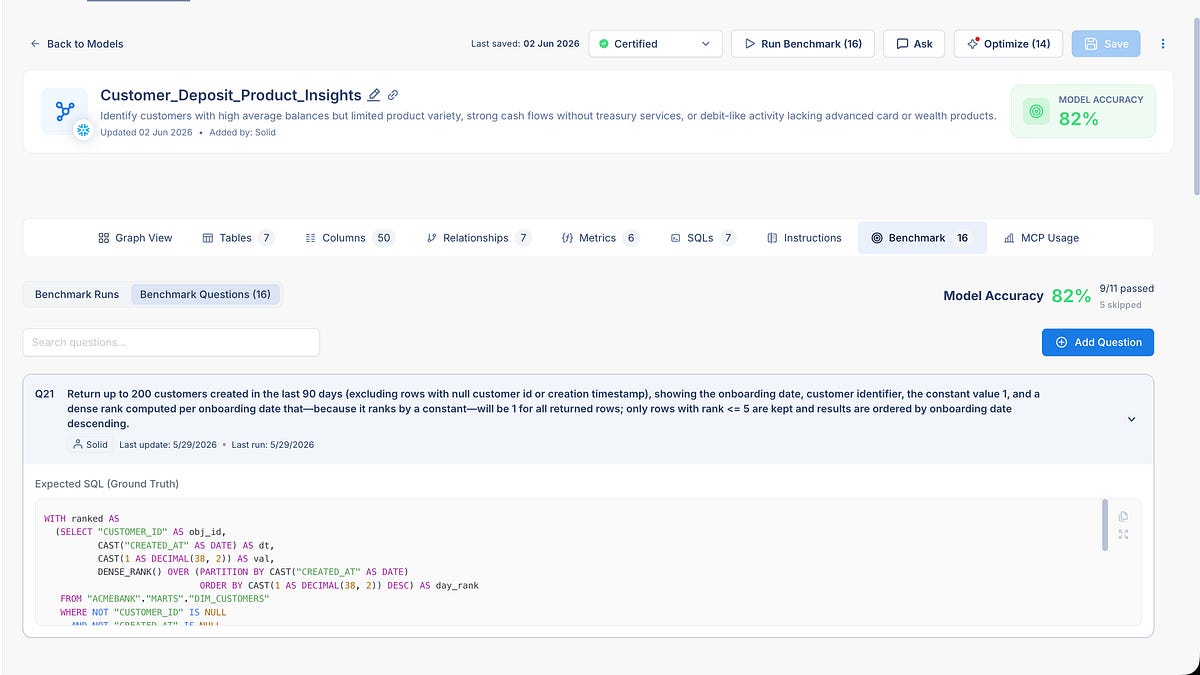
These issues aren't always obvious from reviewing the model itself. One way to evaluate a semantic model is to test it against business questions with known answers, such as:
- What was total revenue last quarter?
- Which products generated the most sales?
- How many customers made repeat purchases?
- How did revenue change compared with the previous reporting period?
Comparing the results with verified answers helps identify incorrect calculations, missing relationships, and other issues that need attention. Solid explores this approach in its article on test-driven semantic models.
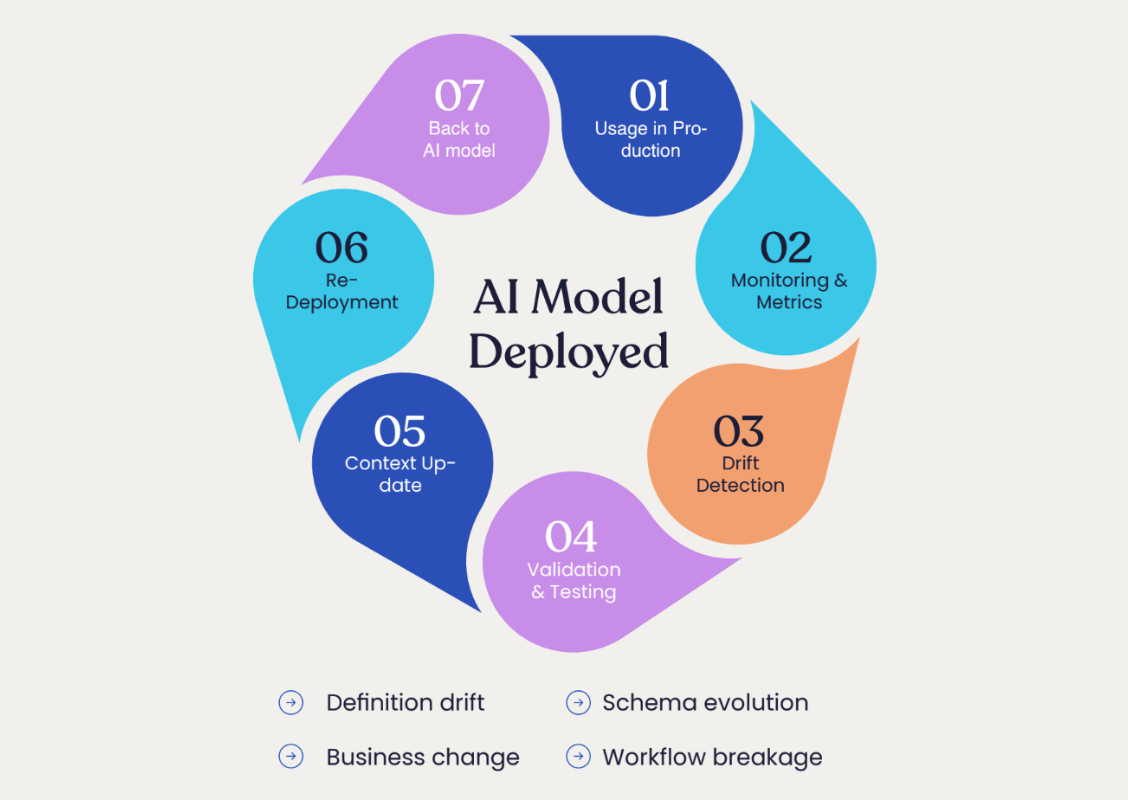
Testing remains important after a model has been introduced. Companies change reporting rules, add products, reorganize departments, and update their data systems. Definitions that worked previously may no longer reflect current requirements.
Maintaining semantic models involves reviewing those changes, updating definitions, and testing whether the revised models still produce the expected results. While testing cannot guarantee that every answer will be correct, it provides a way to identify and address problems before they affect more applications.
How Solid Approaches Semantic Modeling
Building a semantic model often requires teams to bring together information from database structures, existing queries, documentation, and people who understand the business. Solid focuses on making that process more systematic through three related areas:
- Semantic model generation: Developing models from existing data information and business knowledge.
- Testing and evaluation: Checking models against business questions to identify incorrect calculations, missing relationships, and other issues.
- Model maintenance: Refining definitions as business requirements and data structures change.
These areas address different stages of the same process. Generating a model establishes an initial representation of the business, testing helps determine whether it produces the expected results, and maintenance keeps its definitions aligned with changing requirements.
For organizations already using modern data platforms, this approach addresses the business context needed by analytics and AI applications without replacing their existing data infrastructure.
Where Business Context Becomes Useful
Shared business definitions can support several types of enterprise applications. Although each has different requirements, they benefit from having access to established metrics and relationships.
Natural Language Analytics
Employees can ask business questions without writing SQL. A semantic model helps applications connect those questions to established metrics and relationships instead of interpreting raw database structures independently.
Business Intelligence
Reports and analytics applications can reference shared definitions for metrics such as revenue, profitability, and customer retention. This helps teams maintain consistency when working with the same business information.
AI Agents
An AI agent might prepare a weekly business review by pulling sales data, comparing revenue with the previous week, and identifying customers at risk of leaving.
To complete these tasks accurately, the agent needs to understand how the company defines revenue, which transactions should be included, and what qualifies as an at-risk customer. A semantic model provides shared business definitions that help the agent interpret data consistently and produce results that reflect how the business actually operates.
Security and Governance Remain Essential
Enterprise data may contain confidential business information, personal records, and other sensitive material. Connecting an AI application to a data platform should not automatically grant unrestricted access.
Organizations still need appropriate access controls, data protection, testing, and monitoring. A semantic layer can help applications interpret information consistently, but it does not independently guarantee accuracy, security, or regulatory compliance. These responsibilities must be addressed across the broader architecture.
Making Enterprise Data More Useful
Connecting AI to enterprise data gives applications access to information, but making that information useful also requires an understanding of how the business defines and measures it.
Semantic models provide a way to establish those definitions. Testing helps determine whether they produce the expected results, while ongoing maintenance keeps them aligned with changing business requirements.
For organizations exploring enterprise AI, understanding how semantic models are generated, tested, and maintained is an important part of evaluating their architecture.
Getting an answer is easy. Getting the right answer is what matters.
Your AI needs more than access to data. See how Solid brings business context into the picture so your team can trust the answers they get.
Frequently Asked Questions About Enterprise AI Architecture
1. What is enterprise AI architecture?
Enterprise AI architecture describes how an organization's data infrastructure, AI models, applications, and security controls work together to support AI applications.
2. What is a semantic layer in enterprise AI architecture?
A semantic layer connects enterprise data to business definitions, including metrics, calculations, terminology, and relationships. It helps AI applications interpret data more consistently.
3. Why do AI applications need business context?
AI applications can retrieve the correct data but still produce incorrect answers if they use the wrong metrics, calculations, or reporting periods. Business context helps reduce this risk by providing shared definitions.
4. How do you test semantic models?
Teams test semantic models by asking business questions with known answers and comparing the results. This helps identify incorrect calculations, missing relationships, and outdated reporting rules.
5. How do organizations maintain semantic models?
Organizations maintain semantic models by updating business definitions, metrics, and relationships as requirements change. Testing the updated models helps identify issues and keep reporting consistent.
Other posts