Blog
September 25, 2026
What Is Context Engineering? Why Enterprise AI Needs More Than Prompt Engineering

Allison Parlett
Marketing Associate
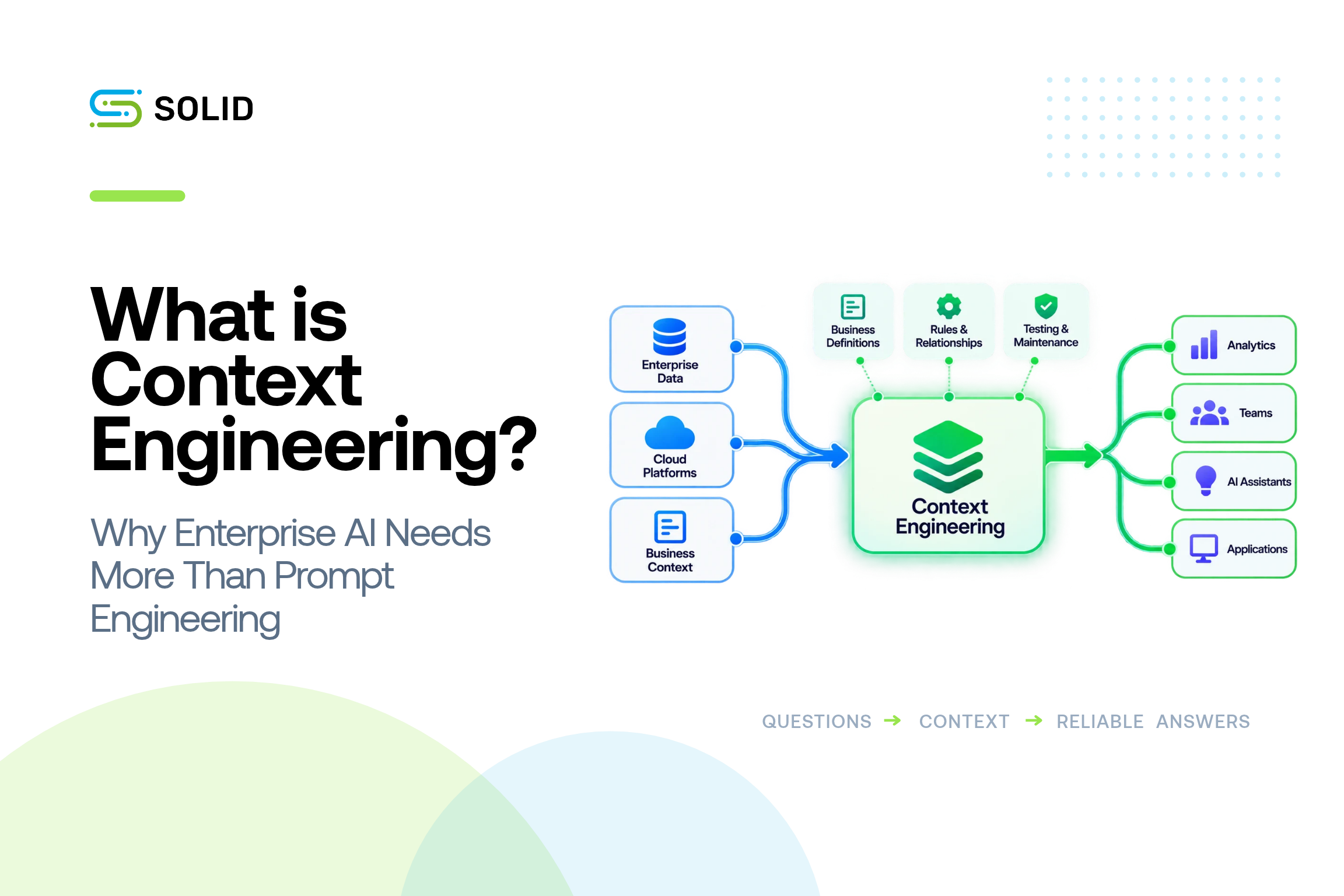
AI is moving beyond simple prompts. Context engineering gives enterprise AI the business definitions, relationships, and rules it needs to deliver more reliable answers.
A marketing director asks an AI assistant, "Which of our campaigns brought in the most customers last quarter?" The assistant searches the company's data, reviews campaign results, and returns an answer. One campaign stands out with 2,000 new customers. Everything appears to work.
But marketing counts everyone who submitted a form as a customer, while sales only counts people who completed a purchase. Finance also uses a different reporting period. The assistant found the data, but it didn't know which definition to use.
The question wasn't poorly written. The assistant was missing the information needed to answer it correctly.
This is where context engineering comes in. Prompt engineering focuses on how we ask AI questions. Context engineering focuses on providing the information, business definitions, and instructions AI needs to answer them.
For organizations connecting AI to enterprise data, a better prompt can improve how a question is understood, but it cannot automatically resolve conflicting definitions or missing information.
What Is Context Engineering?
Context engineering is the process of selecting, organizing, and providing the information an AI system needs to complete a task.
In an enterprise environment, that information can include:
- Business definitions: How the organization defines customers, revenue, retention, and other metrics.
- Data relationships: How information from different tables and systems connects.
- Relevant information: Documents, database records, and previous conversations needed for the task.
- Instructions and rules: Requirements that guide how information should be used.
- Access permissions: Controls that determine which information a user or application can access.
Consider the marketing example. To identify which campaign brought in the most customers, the assistant needs to understand what qualifies as a customer, which campaigns belong to the reporting period, and how purchases are connected to marketing activity.
Context engineering helps make relevant information available when it's needed. The goal isn't to provide as much information as possible, but to provide the information that matters and ensure it reflects how the business operates.
Prompt Engineering vs. Context Engineering
Prompt engineering and context engineering address different parts of the same problem.
Prompt engineering focuses on writing clear instructions that tell AI what to do. Context engineering focuses on providing the information and rules needed to complete those instructions.
For example, an employee might ask:
"What was our customer retention rate last quarter?"
The instruction is clear, but it doesn't explain how the company defines customer retention.
A more detailed prompt might specify the reporting period and ask the assistant to exclude canceled accounts. That can help, but it still depends on the employee knowing which rules to include.
Context engineering addresses this by making established definitions and relevant information available through the organization's systems. Instead of requiring employees to explain the same business rules every time they ask a question, applications designed to use those definitions can reference them when interpreting requests and retrieving data.
The distinction comes down to two things:
- Prompt engineering: Improves how the question or instruction is communicated.
- Context engineering: Provides the information and rules needed to complete the task.
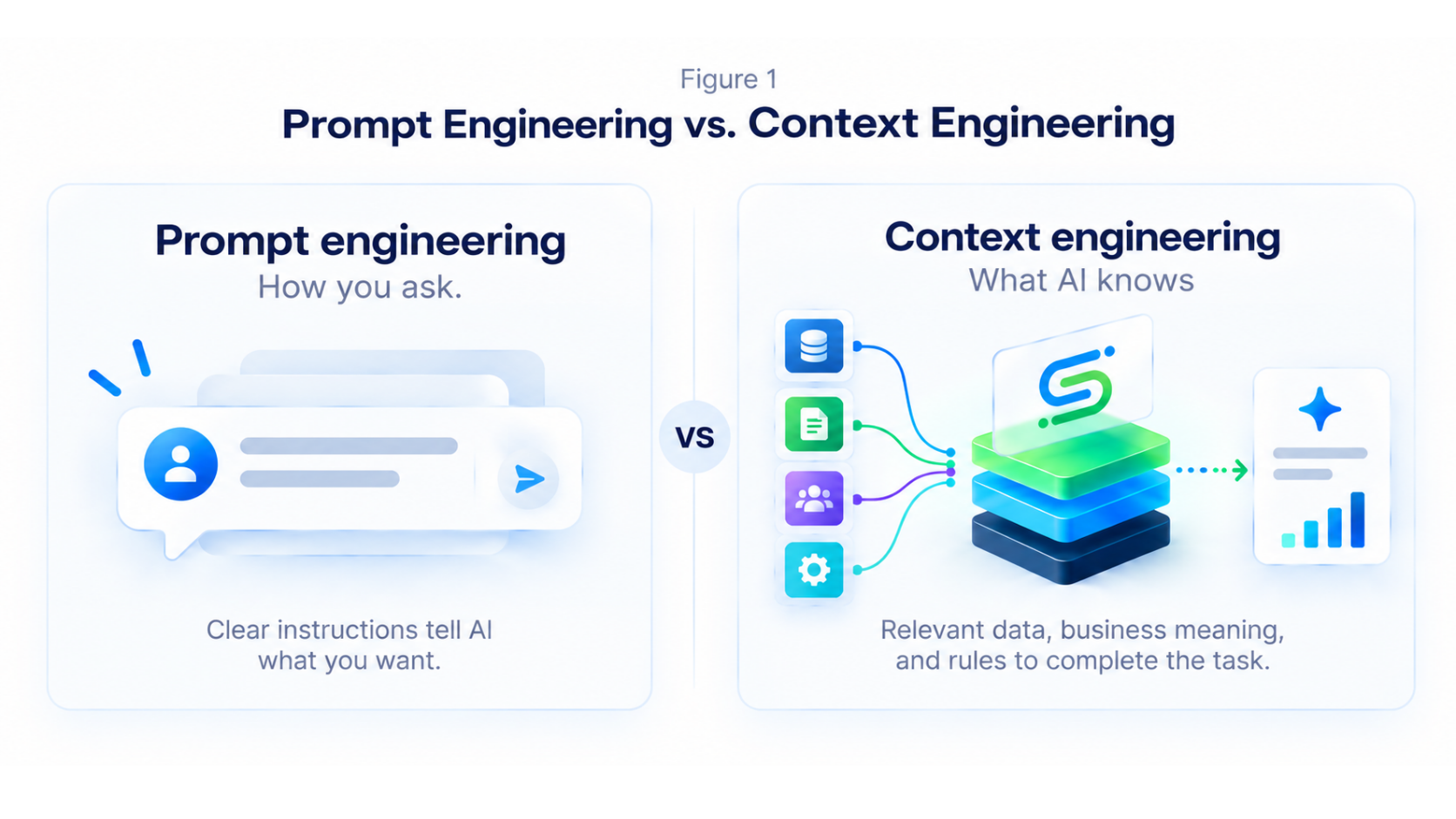
Both remain important. A clear prompt helps the assistant understand what the user wants, while relevant context helps it interpret the information needed to respond.
Why Better Prompts Aren't Enough for Enterprise AI
An employee shouldn't need to understand every database, calculation, or reporting rule just to ask a business question. Yet much of that information is scattered across organizations.
Finance may maintain revenue calculations in a dashboard, sales may use different definitions in its reports, and marketing may have its own rules for measuring conversions.
These differences aren't always obvious to the person asking a question. A carefully written prompt cannot resolve definitions the system doesn't have access to.
Several problems can affect the answer:
- Conflicting definitions: Departments may calculate the same metric differently.
- Missing relationships: The assistant may not understand how records from different systems connect.
- Outdated information: Reporting rules or business definitions may have changed.
- Incorrect calculations: The assistant may retrieve the right records but apply the wrong metric.
The challenge becomes more significant when organizations use AI across multiple departments and applications. If each application interprets business data independently, employees may receive different answers to the same question.
Addressing this requires a shared understanding of what the data means and how it should be used across the business.
The Role of Business Context and Semantic Layers
Context engineering covers a broad range of information, from instructions and documents to previous conversations and database records. For enterprise analytics, one important part is business context.
Business context explains what an organization's data means and how it should be used.
Consider a company that wants to understand customer retention. Its database may contain customer accounts, subscriptions, transactions, and cancellation dates, but those records don't automatically explain whether a paused subscription counts as an active customer or how retention should be calculated.
A semantic layer provides a way to organize business information, including:
- Metrics: Revenue, customer retention, profitability, and other business measures.
- Calculations: Rules that determine how each metric is calculated.
- Relationships: Connections between customers, products, orders, and transactions.
- Business terminology: Shared definitions used across departments.
- Reporting rules: Relevant dates, filters, and classifications.
Instead of interpreting raw database tables independently, applications designed to use a semantic layer can reference established definitions when retrieving and interpreting information.
A semantic layer establishes business meaning, but having one isn’t enough. That context also needs to be accurate, tested, kept current, and available to the AI applications using it.
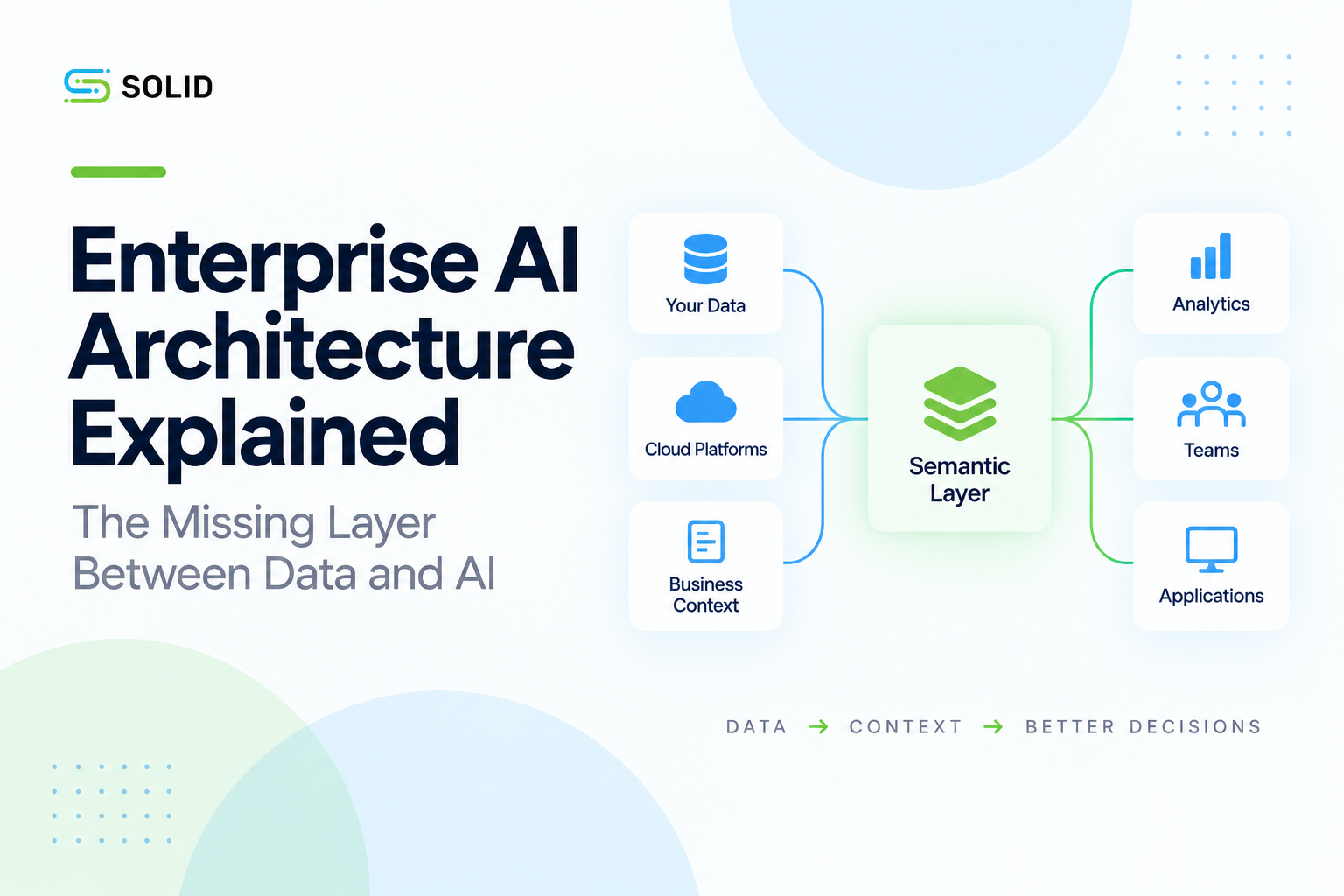
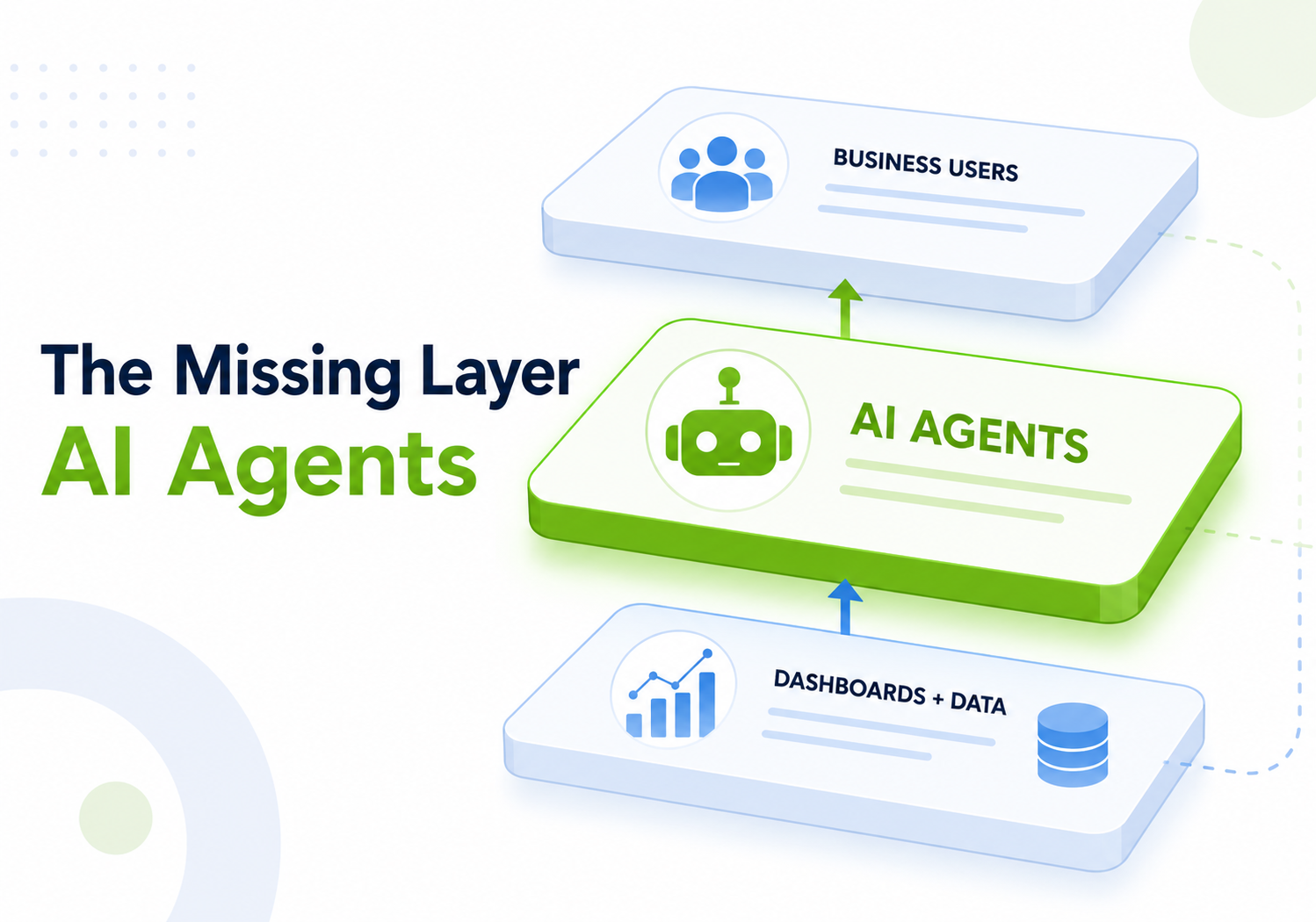
For a closer look at how these components work together, read our previous article, Enterprise AI Architecture Explained: The Missing Layer Between Data and AI .
Why Business Context Needs Testing and Maintenance
Providing AI with business context doesn't automatically make its answers correct.
A definition may be outdated, a calculation may exclude an important transaction, or a relationship between two tables may be missing. These problems can affect results even when the assistant follows its instructions correctly.
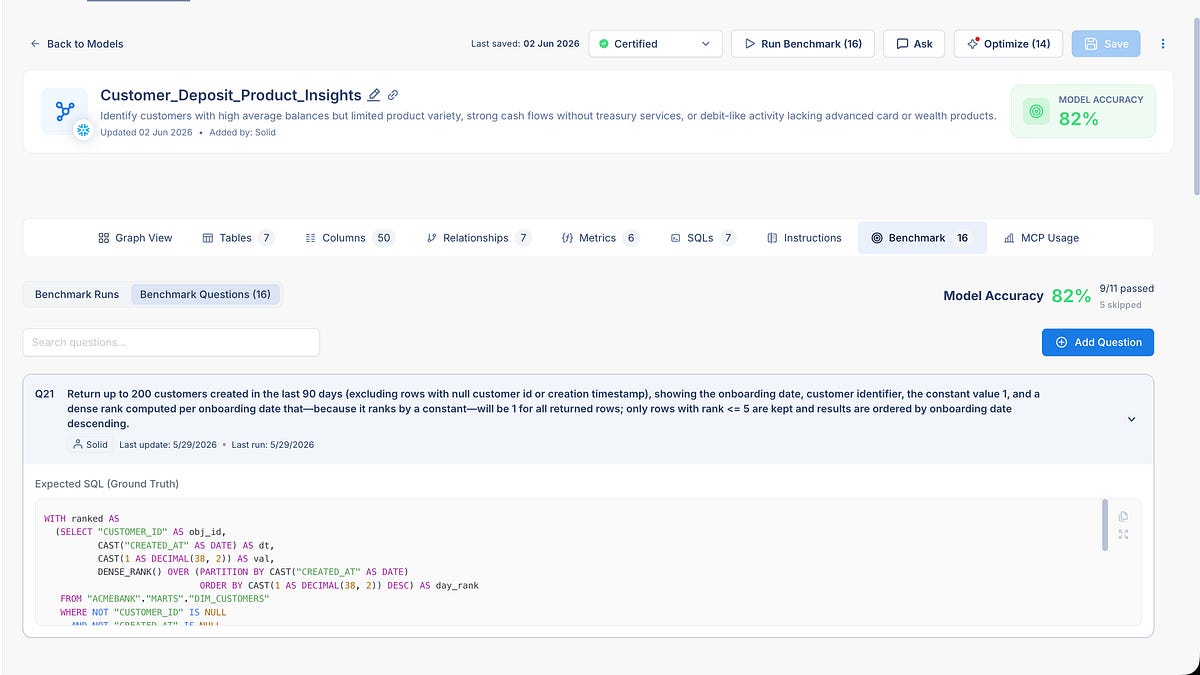
One way to evaluate a semantic model is to test it against business questions with known answers, such as:
- What was total revenue last quarter?
- Which marketing campaign generated the most completed purchases?
- How many customers renewed their subscriptions?
- How did customer retention change compared with the previous quarter?
Comparing the results with verified answers helps identify incorrect calculations, missing relationships, and other issues that need attention.
Business context isn’t a one-time setup. Products change, reporting rules evolve, data systems are updated, and definitions that worked previously may no longer reflect how the business operates.
Maintaining that context means reviewing changes, updating definitions and relationships, and testing whether the revised models still produce expected results.
Testing can’t guarantee every answer will be correct, but it helps organizations catch problems and keep business context aligned as the business changes.
How Solid Approaches Business Context
For many organizations, the challenge isn't a lack of data. It's making sure AI understands how that data relates to the business.
Definitions may already exist in reports, database queries, documentation, and the knowledge of individual teams. Bringing that information together, checking whether it's correct, and maintaining it over time can require significant work.
Solid focuses on making this process more systematic through three related areas:
- Semantic model generation: Developing models from existing data information and business knowledge to establish definitions, metrics, calculations, and relationships.
- Testing and evaluation: Checking models against business questions with known answers to identify incorrect calculations, missing relationships, and other issues.
- Model maintenance: Refining definitions and relationships as business requirements and data structures change.
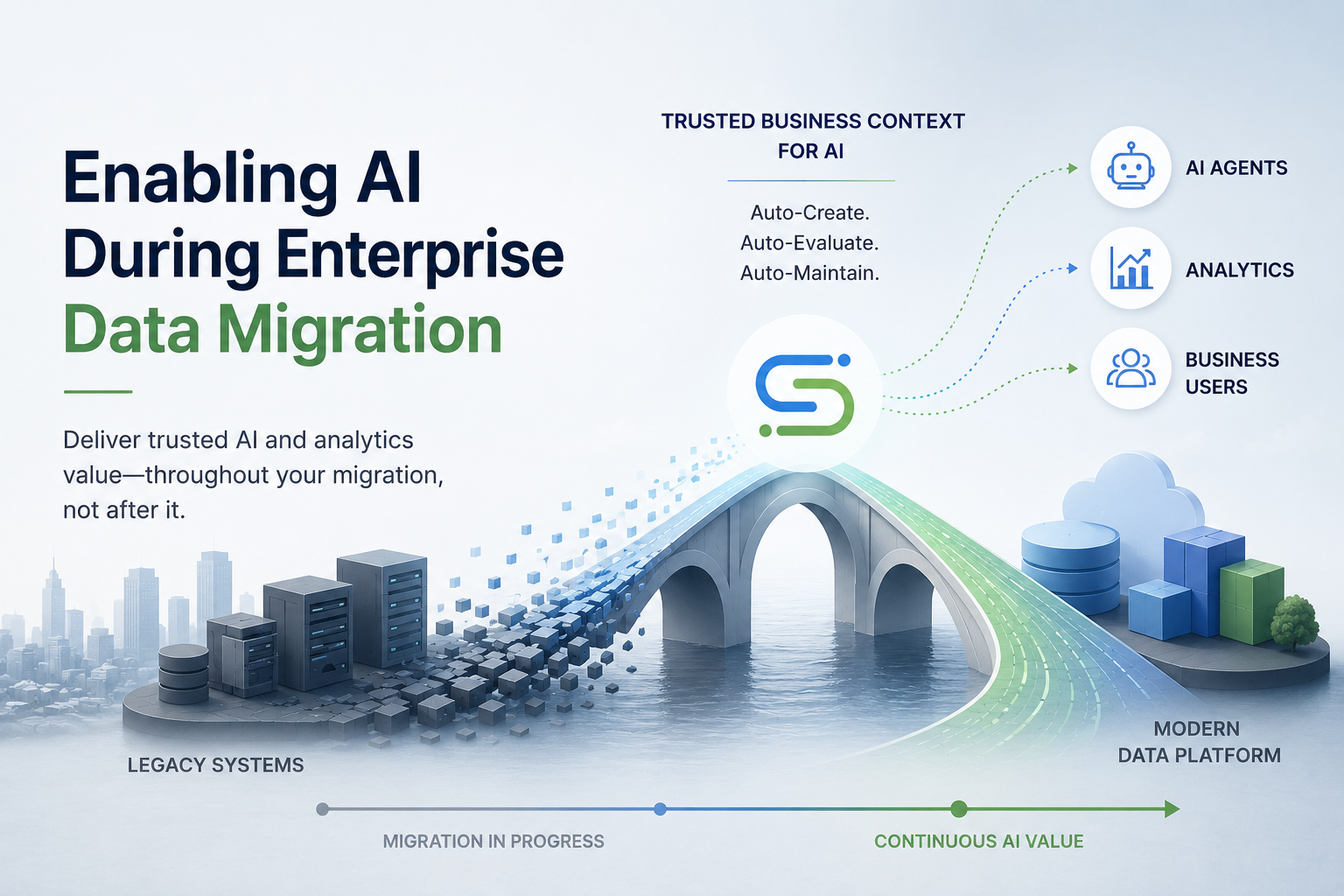
Together, these capabilities help create trusted business context that can be reused across AI agents, analytics tools, and workflows instead of rebuilding definitions for every application.
For organizations already using modern data platforms, Solid provides this business context without replacing their existing data infrastructure.
Security and Governance Remain Essential
Context engineering also involves deciding which information an AI application should receive. Enterprise data may contain confidential business information, customer records, and other sensitive material.
Providing relevant context should not mean giving every application unrestricted access.
Organizations still need appropriate access controls, data protection, testing, and monitoring. Business context can help applications interpret information consistently, but it does not independently guarantee accuracy, security, or regulatory compliance.
These responsibilities must be addressed across the broader enterprise architecture.
Better Questions Need Better Context
A better prompt helps AI understand the question. The right context helps it understand your business.
See how Solid helps build, test, and maintain the business context AI agents and analytics tools need to work reliably with enterprise data.
Frequently Asked Questions About Context Engineering
1. What is context engineering?
Context engineering is the process of selecting, organizing, and providing the information an AI system needs to complete a task. This can include instructions, documents, business definitions, data, and previous conversations.
2. How is context engineering different from prompt engineering?
Prompt engineering focuses on writing clear instructions. Context engineering focuses on providing the information and rules AI needs to follow those instructions. Both help AI complete tasks, but they address different requirements.
3. Is context engineering replacing prompt engineering?
Context engineering expands the focus beyond writing prompts. Prompt engineering remains useful, but enterprise applications also need relevant data, business definitions, and other information to answer questions reliably.
4. Why is context engineering important for enterprise AI?
Enterprise data often comes from multiple systems and departments. Context engineering helps make relevant information and business definitions available so AI applications can interpret that data more consistently.
5. How does a semantic layer support context engineering?
A semantic layer organizes business definitions, metrics, calculations, and data relationships. Applications designed to use it can reference those definitions rather than independently interpreting raw data.
6. How does Solid support context engineering?
Solid focuses on generating, testing, and maintaining semantic models. These models provide shared business definitions that help analytics and AI applications interpret enterprise data more consistently.
Other posts