Blog
November 4, 2026
Semantic Layer and Text to SQL Tools in 2026: Capabilities, Use Cases, and Key Differences

Allison Parlett
Marketing Associate
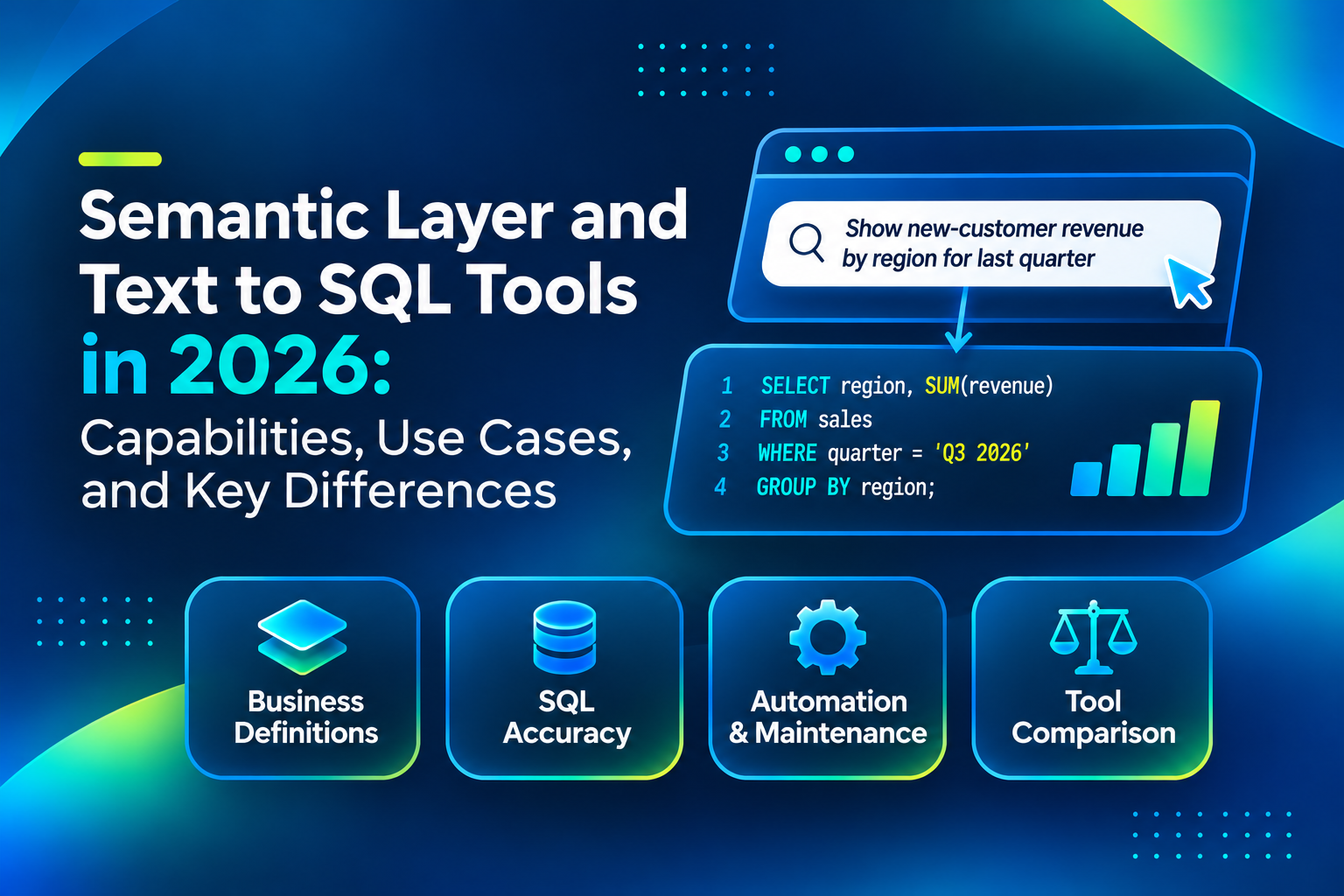
Semantic layer and Text to SQL platforms take different approaches to managing business definitions, SQL accuracy, and ongoing maintenance. Learn how six leading tools differ and where Solid fits within enterprise AI.
Enterprise AI applications can query databases, generate SQL, and return answers in seconds. But a technically correct query can still produce the wrong business answer.
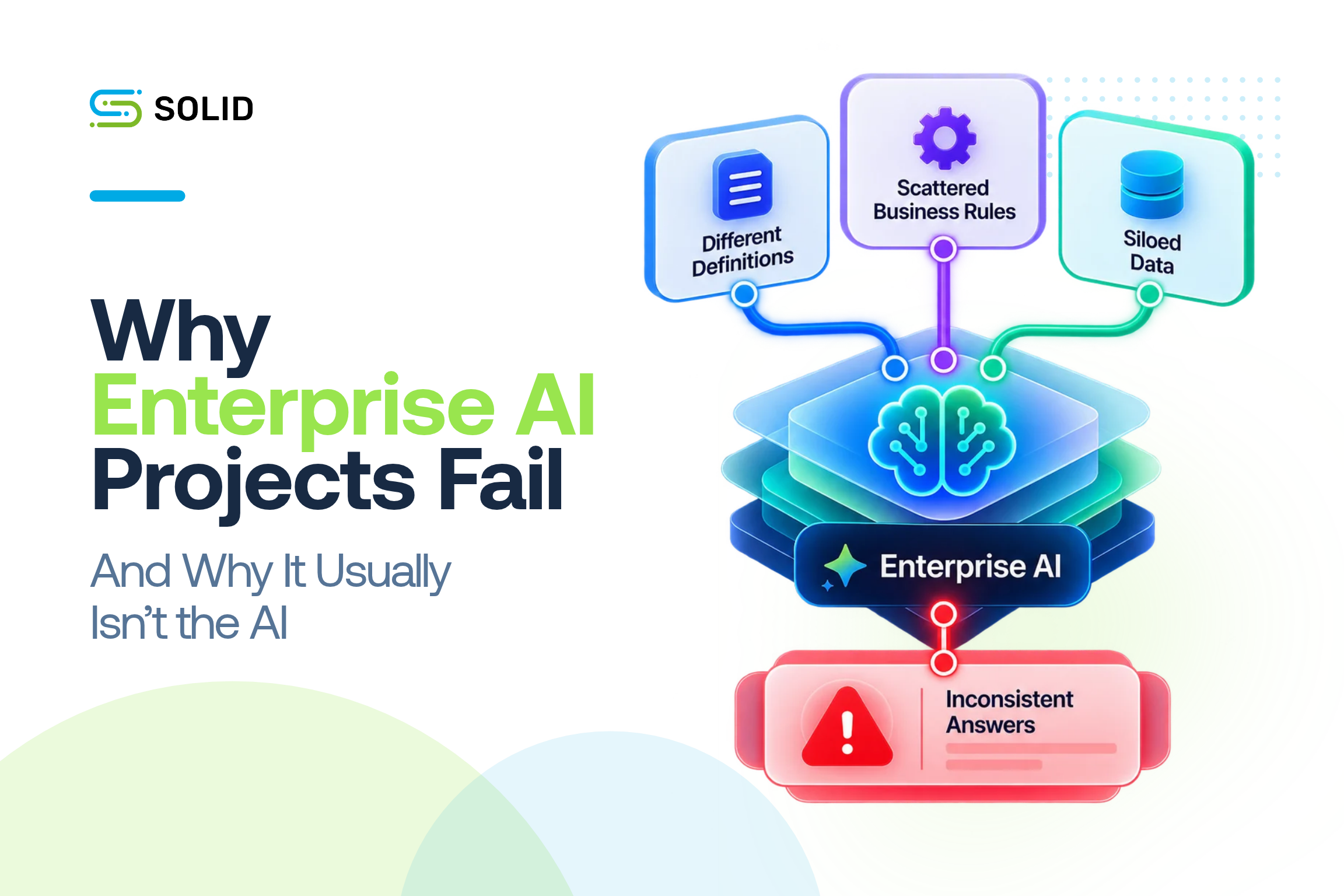
Revenue calculations may differ between Finance and Sales. Customer activity might be measured through subscriptions, logins, or product usage. These rules are often spread across SQL queries, dashboards, and internal documentation.
Without the correct definitions, applications may select the wrong tables, apply incorrect calculations, or overlook required filters.
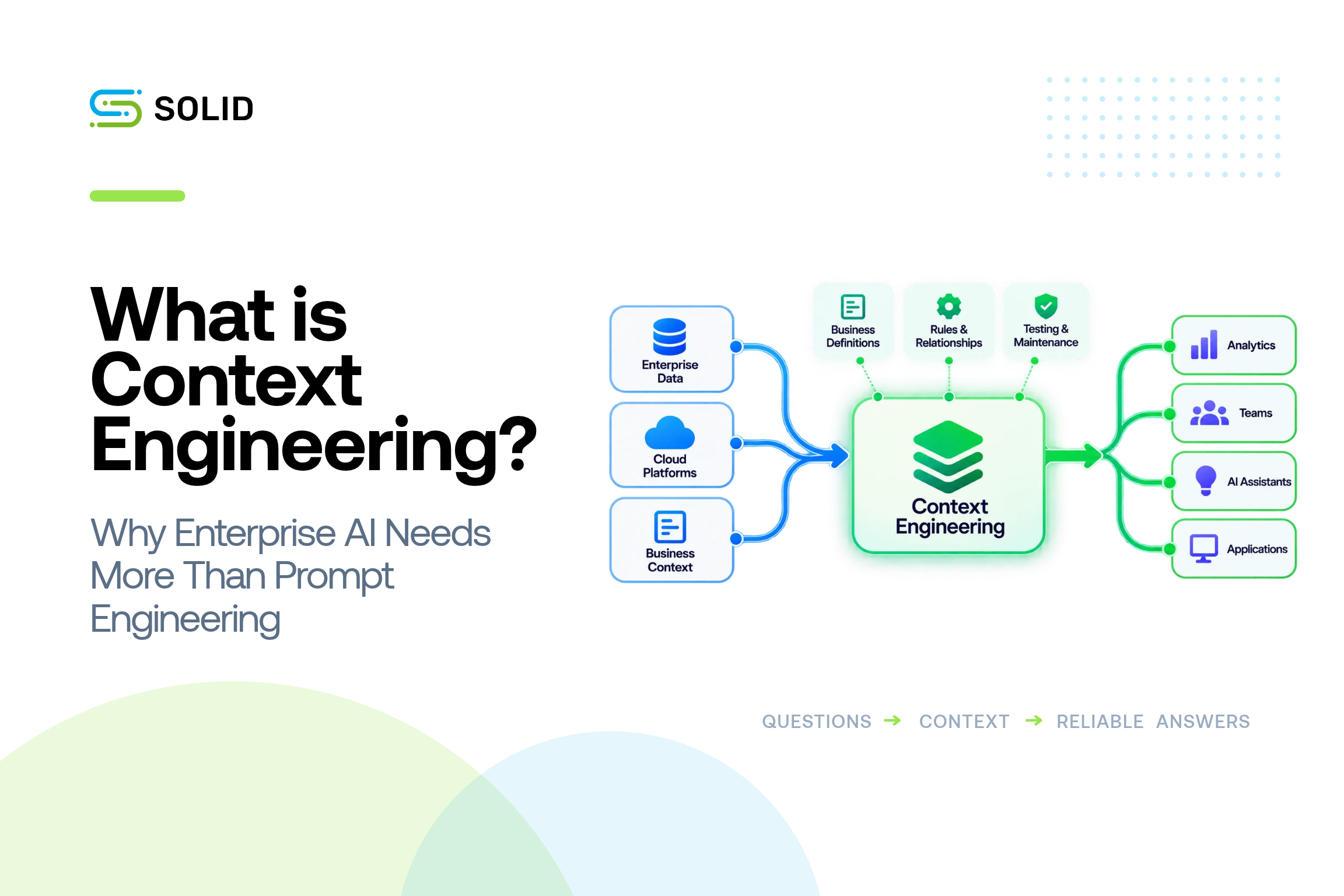
Semantic layers organize business definitions and data relationships so applications can interpret questions using established reporting rules.
The platforms covered here approach semantic modeling, SQL generation, evaluation, and maintenance differently. Understanding those differences can help teams determine which capabilities fit their existing data environment and applications.
What Is a Semantic Layer for Text to SQL?
A semantic layer connects database structures with business definitions. It defines how metrics are calculated, which tables are related, and how information should be interpreted across applications.
Text to SQL converts questions written in everyday language into SQL queries.
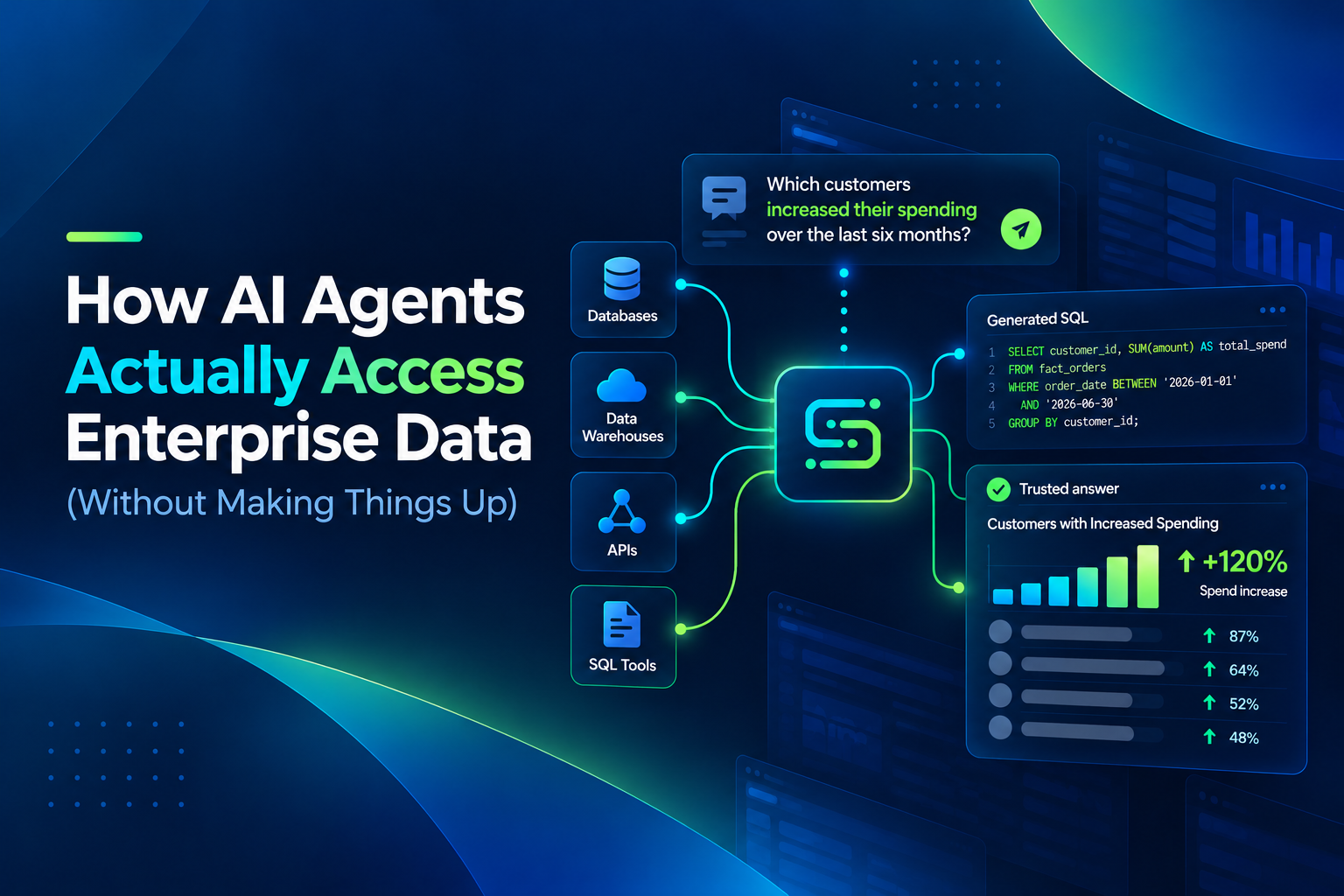
A question such as "Which customers have reduced their product usage over the past 90 days?" requires more than locating a customer table.
The query needs to account for:
- Data sources: Where customer and usage information is stored
- Relationships: How the relevant tables connect
- Business definitions: What qualifies as reduced usage
- Reporting rules: Which dates, filters, and calculations apply
A query can execute successfully while using an incorrect calculation or reporting period.
Semantic models provide context for generating queries that reflect business requirements. Some Text to SQL systems also use metadata, instructions, and SQL examples without requiring a separate semantic layer.
Six Semantic Layer and Text to SQL Tools
The following platforms support different parts of semantic modeling, analytics, and Text to SQL.
How Do Their Capabilities Differ?
These comparisons reflect documented product capabilities rather than independent product testing. Integration support and automation features vary by platform.
1. Solid: Semantic Model Management for Enterprise AI
Best suited for: Teams developing AI agents that need established business definitions and a process for evaluating generated SQL.
Years of SQL queries and reporting processes can contain valuable business knowledge, including revenue calculations, customer classifications, and relationships between datasets.
Preparing those definitions for AI applications involves reviewing existing logic, building semantic models, and checking whether generated queries produce expected results.
Solid organizes this work into three connected processes.
Auto Create
Generates draft semantic models using:
- Database metadata and relationships
- Existing SQL query history
- Business context and reporting definitions
Models can include relevant tables, metrics, relationships, and SQL examples. Teams review and refine the generated definitions before approving them.
Auto Evaluate
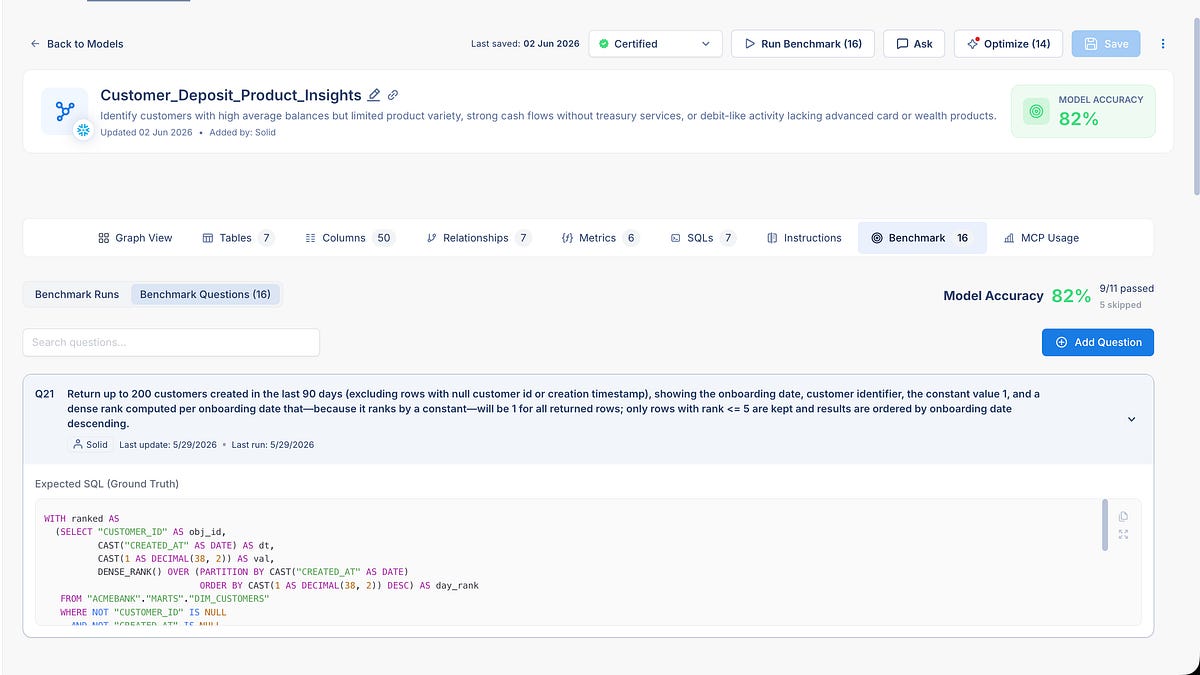
Tests generated SQL against benchmark questions and trusted reference queries.
Evaluation includes:
- Pass and fail results
- Accuracy reporting
- Query failure analysis
- Model revisions and repeated testing
These results allow teams to investigate incorrect calculations, relationships, or filters before making a model available to an application.
Auto Maintain
Identifies supported changes that may affect existing models, including:
- Database schema changes
- Benchmark failures
- Gaps in model coverage
Recommended updates are presented for human review before being applied.
Practical Application: Customer Retention
Customer success teams may need to identify accounts with declining engagement across subscription records, product events, and user activity.
Login counts alone may not reflect actual engagement. Product usage, subscription status, and reporting periods can provide additional context.
Using Solid's documented workflow, a team could:
- Generate a draft model from existing data and SQL.
- Review engagement definitions and table relationships.
- Evaluate generated queries against approved references.
- Make the reviewed model available to a compatible AI application through supported MCP tools.
This is an illustrative workflow, not a reported customer deployment.
Solid's SQL validation process does not return raw query results to Solid. Data retrieval remains within the connected application's authorized environment.
What Makes Solid Different?
Solid connects semantic model creation, SQL evaluation, and ongoing maintenance within one workflow designed for enterprise AI applications.
Rather than treating model development as a separate task, Solid supports the process from preparing business definitions to testing generated queries and identifying changes that may affect existing models.
Its approach includes:
- Automation across the model lifecycle: Auto Create, Auto Evaluate, and Auto Maintain support model development, testing, and maintenance recommendations.
- Support for different data environments: Models can use available database metadata, SQL history, and business context, with integrations for supported data environments.
- Built for AI applications: Reviewed semantic models can provide business definitions to compatible AI agents through supported integrations, including MCP tools.
- Human review: Teams can review generated definitions, investigate evaluation failures, and approve recommended changes.
These capabilities allow teams to manage semantic models as business requirements and underlying data evolve.
2. dbt Semantic Layer: Consistent Business Metrics
Best suited for: Teams managing transformations and metrics through dbt.
dbt Semantic Layer centralizes metric definitions so supported reporting and analytics applications can use consistent calculations.
Its capabilities include:
- Centralized metrics and semantic definitions
- SQL generation through MetricFlow
- Shared metrics across supported applications
- MCP integration for AI tools
- Development through dbt workflows
Practical application: Finance and Sales can use the same revenue calculation rather than maintaining separate definitions in each reporting tool.
dbt also supports assisted semantic model generation. Its approach remains closely connected to existing dbt projects and development workflows.
Documentation: dbt Semantic Layer
3. Cube: Shared Metrics for Data Applications
Best suited for: Companies building analytics into internal software or customer-facing products.
Cube combines semantic modeling with data access and query performance features.
Its capabilities include:
- Reusable measures, dimensions, and relationships
- SQL and API access
- Query caching and preaggregations
- Data access policies
- Integration with analytics applications
Practical application: A SaaS product displaying usage metrics in a customer portal can use shared definitions for internal reporting.
Cube's modeling framework manages the definitions, while caching and preaggregations support analytical workloads.
Documentation: Cube Data Modeling
4. AtScale: Enterprise Semantic Modeling
Best suited for: Organizations using multiple BI platforms and data environments.
AtScale provides shared semantic definitions across supported analytics applications.
Its capabilities include:
- Enterprise metrics and dimensions
- Visual and programmatic modeling
- Integration with supported BI tools
- Governed data access
- Query monitoring and optimization
- Supported AI integrations
Practical application: Finance, Sales, and Operations can continue using different reporting tools while working from shared revenue and operational metrics.
AtScale's approach focuses on enterprise semantic modeling across established analytics environments.
Documentation: AtScale Documentation
5. Databricks Genie: Natural Language Analytics
Best suited for: Organizations using Databricks that want users to query data without writing SQL.
Genie allows business users to ask questions in everyday language and receive results generated from configured datasets.
Its capabilities include:
- Natural language to SQL
- Unity Catalog integration
- Business instructions and SQL examples
- Benchmark testing against reference answers
- Query inspection and editing
- Monitoring and feedback
Practical application: A sales manager can ask which products generated the most revenue last quarter and inspect the resulting query.
Genie supports benchmark evaluation, including comparisons with approved SQL results. Its primary focus is natural language data exploration within Databricks.
Documentation: Databricks Genie | Testing and Monitoring
6. Omni: Business Intelligence and Semantic Modeling
Best suited for: Teams managing reporting, dashboards, and semantic definitions within one analytics environment.
Omni combines semantic modeling with business intelligence workflows.
Its capabilities include:
- Shared semantic definitions
- SQL-based data exploration
- Reusable metrics and dimensions
- Dashboards and reporting
- Shared model extensions
- Governance and access controls
Practical application: Operations teams can build dashboards using shared customer activity definitions while leadership uses the same metrics in other reports.
Omni's approach places semantic modeling within data exploration and reporting.
Documentation: Omni Documentation
What Should Enterprise Teams Look for in a Semantic Layer?
Platform selection depends on existing systems, application requirements, and how business definitions are managed.
Model Creation
Review how models are developed and maintained.
- Can existing SQL and reporting definitions be reused?
- How are relationships and metrics identified?
- Can generated models be reviewed and edited?
- What preparation is required before production use?
SQL Accuracy
A query that runs successfully is not necessarily correct.
Evaluation should check:
- Selected tables and relationships
- Required filters and calculations
- Reporting periods
- Results compared with approved SQL or expected answers
- Failures requiring investigation
Query optimization and benchmark testing serve different purposes. Faster execution does not establish business accuracy.
Ongoing Maintenance
Database structures, metrics, and reporting rules change over time.
Review how the platform:
- Detects supported changes
- Identifies affected models
- Recommends updates
- Manages review and approval
Integration and Security
Check compatibility with existing warehouses, BI tools, APIs, and MCP integrations.
Data permissions and access controls must remain in place. Semantic models do not replace the security requirements of connected systems.
Ownership
Define who reviews business definitions, investigates failed queries, and approves models for production.
Clear responsibilities make ongoing maintenance easier to manage.
Frequently Asked Questions
What is the best semantic layer for Text to SQL in 2026?
There is no single platform suited to every environment.
Solid focuses on semantic model creation, evaluation, and maintenance for enterprise AI applications.
dbt supports governed metrics, Cube provides shared definitions and query performance features, and AtScale supports semantic modeling across enterprise analytics environments.
Databricks Genie focuses on natural language analytics, while Omni combines semantic modeling with reporting.
Does Text to SQL require a semantic layer?
Not always. Applications can use database metadata, instructions, and SQL examples.
A semantic layer provides structured business definitions that can guide query generation across supported applications.
How can semantic layers improve SQL accuracy?
They provide definitions for metrics, relationships, calculations, and reporting rules.
Generated SQL still needs testing against trusted results. Semantic models alone do not guarantee correct answers.
What is semantic model generation?
It is the process of creating draft semantic models using available database information, SQL, and business context.
The capabilities vary by platform, and generated definitions still require review.
How does Solid evaluate SQL accuracy?
Solid evaluates generated queries using benchmark questions and trusted reference SQL.
Results identify failures that teams can investigate before approving or updating a model.
How does Solid maintain semantic models?
Solid identifies supported schema changes, benchmark failures, and model coverage gaps.
It recommends updates for review before they are applied.
What should enterprises compare when choosing semantic modeling software?
Enterprise teams should evaluate more than whether a platform can generate SQL or define business metrics.
Important criteria include:
- Automation: How much model creation, evaluation, and maintenance can be automated?
- Compatibility: Does the platform support existing data environments, BI tools, and AI applications?
- SQL evaluation: Can generated queries be tested against approved results?
- Maintenance: How are schema changes, reporting updates, and model issues identified?
- Governance: Who reviews definitions, approves changes, and manages access?
The right choice depends on existing infrastructure, application requirements, and how much ongoing model management a team needs.
How do AI agents use semantic layers?
Agents can access semantic information through supported integrations, including APIs and MCP tools.
The definitions guide SQL generation while data access remains subject to the application's permissions.
Choosing the Right Approach for Enterprise AI
Semantic layer and Text to SQL platforms support different needs, from centralized business metrics and reporting to natural language analytics and AI applications. For teams building AI agents, creating a semantic model is only part of the process. Generated queries need to be evaluated, and models need to stay current as data and business requirements change. Solid brings these activities together through Auto Create, Auto Evaluate, and Auto Maintain. Its approach supports model development, SQL evaluation, and ongoing maintenance, while keeping human review part of the process. Learn more about Solid's approach to semantic model management.
Sources
- Solid: The Three Loops
- Solid: Platform Components
- dbt Semantic Layer
- Cube Data Modeling
- AtScale Documentation
- Databricks Genie
- Databricks Genie Testing and Monitoring
- Omni Documentation
Other posts